A Church Ceremony and a Palermo Reception: How to Pair Them
9 November 2026 · 8 min read · Rosario Spadaro
If your ceremony is in a church in Palermo, the church is the fixed point. The parish decides what it can offer you — the date, the hour, what is possible inside the building — and the reception venue then has to work around those answers rather than the other way round. The useful order is parish first, then a shortlist built on distance, timing and shade. This is how I would approach it.
Why the church, not the venue, comes first
Most venue guides — including my guide to choosing a Palermo wedding venue — tell you to settle the ceremony before you fall for a building. With a church ceremony that advice becomes literal. The parish holds a calendar of its own, and it is the one part of the day you cannot usually move by an hour to suit a caterer.
So before you shortlist receptions, get four things from the parish:
Those four answers eliminate venues faster than any brochure. A parish that offers a late-morning hour points you towards a long lunch; one that offers the late afternoon points you towards a short aperitivo and a dinner that begins in the dark. Neither is better. They are different days.
- whether it can celebrate a wedding on your date, and which times it offers
- how many guests it holds comfortably, seated
- what is permitted inside during the ceremony — photography, movement, flowers
- anything you are expected to arrange yourselves beforehand
How far is too far between the church and the reception
The distance question usually gets answered by accident: you find a venue you love, then discover it sits on the other side of the city from the church. Better to set a limit first, then look.
In Palermo a short distance on the map can be a slow journey at the wrong hour. The historic centre is congested through much of the day, and the roads out towards Mondello and the plain beyond the city carry evening traffic in summer. Ask each venue what the drive takes at the hour you would actually make it, on the day of the week you would make it — not at eleven in the morning, when everything is quiet.
There are two journeys to think about, not one: the group move from the church to the reception, and the return at the end of the night. The second is the one couples forget and guests remember.
Two honest shapes:
- Reception in or near the centre. Guests travel a few minutes or walk. The middle of the day stays loose, and you can take twenty minutes for photographs without anyone noticing. What you give up is space: a city palazzo rather than a garden, and a background of stone and traffic rather than trees.
- Reception outside the city. Gardens, quiet, room for children to run. What it costs is a coach move, a tighter portrait window, and a return transfer that has to be arranged properly. How a Palermo wedding day moves covers drop-off points and vehicles in detail.
The gap between the two, and who it belongs to
Between the last hymn and the first glass there is a stretch of time, and it is where most Palermo wedding days are won or lost. Understanding who sets the ceremony hour helps — the ceremony start time piece goes into that — but the gap itself is your decision, within the limits the parish and the venue give you.
Three workable versions:
If you want portraits in the city in that window, choose the area by the hour rather than by the view, and check access before you fix a route.
- No gap. Guests leave the church and go straight to drinks. Nothing to organise, nobody standing in the sun. The cost is portrait time: it has to come out of the reception, usually just before dinner, when the light may not be what you hoped for.
- A short gap. Guests are seated with a drink in shade while the two of you take twenty or thirty minutes somewhere close by. This is the version I would choose where the geography allows it, because the photographs happen without the day stalling.
- A long gap. Common when the church offers a morning hour and the venue cannot receive you until later. It works, but only with a plan: a base, shade, food and a clear time to reassemble. Without that, guests wilt, and older relatives will remember the waiting longer than the ceremony.
An illustrative shape to a day with a church ceremony in Palermo
Below is one version, deliberately told in blocks rather than clock times, because the parish's hour is the only fixed number in it. Treat it as a way of thinking, not a schedule to copy.
- Morning. Getting ready, with the hair and make-up timeline built backwards from the departure time rather than forwards from breakfast.
- Arrival. Guests at the church twenty minutes early, in shade if there is any, with someone on the door who knows who they are.
- Ceremony. Length set by the rite and by whether there is a Mass; ask the parish so the rest of the day can be planned around it.
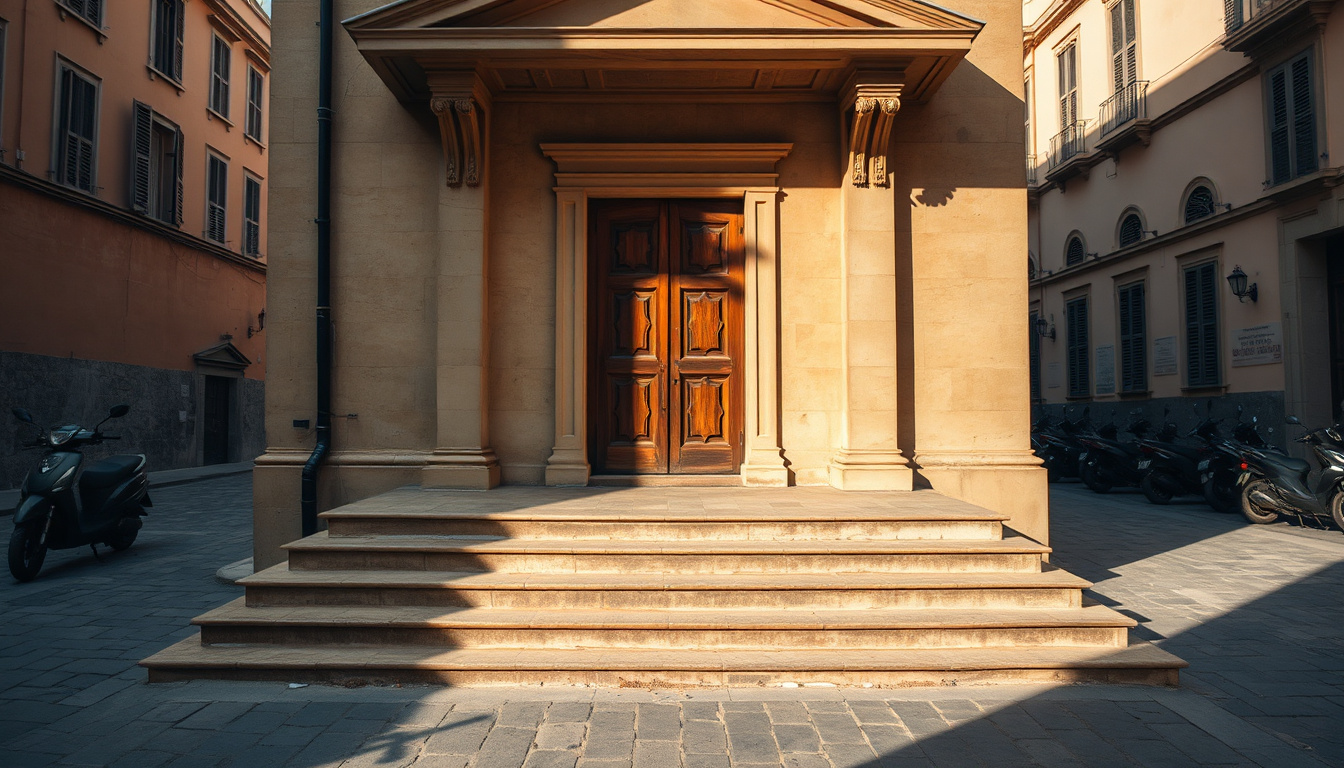
- The door. Ten or fifteen minutes of congratulations on the steps — often the warmest photographs of the day, and the ones nobody has to arrange.
- Transfer. One coach move, or a short walk, with the arrival drink timed for when people actually arrive rather than when the schedule says they should.
- Aperitivo and portraits. Guests in shade with food; the two of you away for half an hour, close enough to be back before anyone wonders where you are.
- Dinner and after. Seated later than you might expect, with dancing afterwards and the light gone by then.
Light, shoes and the ten minutes outside the church door
Two things about a church that photographers notice and couples rarely do until the day.
The first is the light. Inside the building it will be far dimmer than the street you arrived from, and the eye adjusts in seconds while a camera does not. That is not a problem; it is a different set of decisions. But it means the exit is the moment everything changes, and it is worth protecting. It is also why the ten minutes on the steps so often produce the frames you end up keeping: everyone is outside, the nerves have gone, and nothing is being staged.
The second is that the church will have its own terms for photography inside, and they are not negotiable by whoever you have hired. Ask the parish in advance, get the answer in writing, and build the timeline on the assumption that movement and flash may be restricted. I plan on working from the edges, with the light that is in the building, and staying out of the central aisle wherever I can.
Then there is everything your guests have to stand in: stone steps, hot paving, a wait in full sun, and shoes chosen for a garden. A short, clear briefing does more for the rhythm of the morning than any schedule — what to tell guests before a Palermo wedding covers the arrival time, the transfer and the surfaces. One paragraph about phones belongs there too: an aisle with six screens in it looks, in photographs, like an aisle with six screens in it.
What to send the reception venue before you shortlist
Send the same email to every venue on the list, naming your church and your ceremony hour. Comparable answers are the point.
- What does the drive from the church take at that hour, on our day of the week?
- Where does a coach stop, and how far is the walk from there to the first drink?
- What is the earliest you can receive guests, and is that space shaded at that time?
- If the ceremony runs late, what happens to the timing at your end?
- Where would the two of us go for half an hour of photographs, in shade, within the grounds?
- What is the wet-weather plan for the guests' arrival?
- What time does music have to stop, and how do guests leave at the end of the night?
- Is there an indoor room we can use if guests arrive before the aperitivo is ready?
Arranging both ends from another country
The sequence matters more than the correspondence here. Ask the parish first, in writing, for the date, the times it can offer, the seated capacity and the conditions inside. Only then shortlist receptions, with those four answers in front of you.
When you approach a venue, tell it exactly which church you are using and the hour you have been given. Ask whether it can hold a provisional date while the church side is confirmed — some can, some cannot, and it is better to know than to assume.
Then confirm the two things your guests will actually experience: where the coach stops at each end, and how they get home. Put both in the guest briefing, with a map pin for the church door, because 'the church in the centre' is not an address anyone can follow.
If a site visit is possible, use it. Standing on the church steps at your ceremony hour tells you more about heat, shade and traffic than any photograph of the venue will.
If you are weighing a church ceremony against a reception venue in Palermo, tell me the date, the two places you are considering and what matters most about the middle of the day. I will give you an honest view of how the timing and the light would work.
Frequently asked
- Can we hold the reception outside Palermo if the ceremony is in the centre?
- It is possible, and it changes the middle of the day rather than the whole plan. You add a coach move and you shorten the window for photographs. Ask the venue what the drive takes at your ceremony hour, time the arrival drink for when guests actually arrive, and plan the return at the end of the night.
- How long should the gap between the ceremony and the reception be?
- There is no standard. The parish's hour and the venue's earliest arrival time decide most of it. No gap keeps guests comfortable but eats into portrait time; a short gap suits most days; a long gap needs a base, shade and a clear time to reassemble, or guests wilt before dinner.
- Can our photographer work inside the church?
- That is the parish's decision rather than the photographer's, and it varies from church to church. Ask well before the day, get the answer in writing, and plan the timeline on the assumption that movement and flash may be restricted. The ceremony is then photographed from the edges, with the light that is there.
- Do guests need a coach between the church and the venue?
- For an international guest list it usually simplifies the day, because it removes parking, directions and language from the equation and brings everyone to the aperitivo together. Confirm the drop-off point with the venue first: a coach that cannot stop near the door changes the plan for the whole transfer.
Sources & further reading
Photographed across the whole island
See how a Sicilian wedding day is documented on the Destination Wedding Sicily home page, explore the location guides, or view the full Italian portfolio at rosariospadaro.com.
Check your dateKeep reading