What Time Should a Sicilian Wedding Ceremony Start?
5 October 2026 · 8 min read · Rosario Spadaro
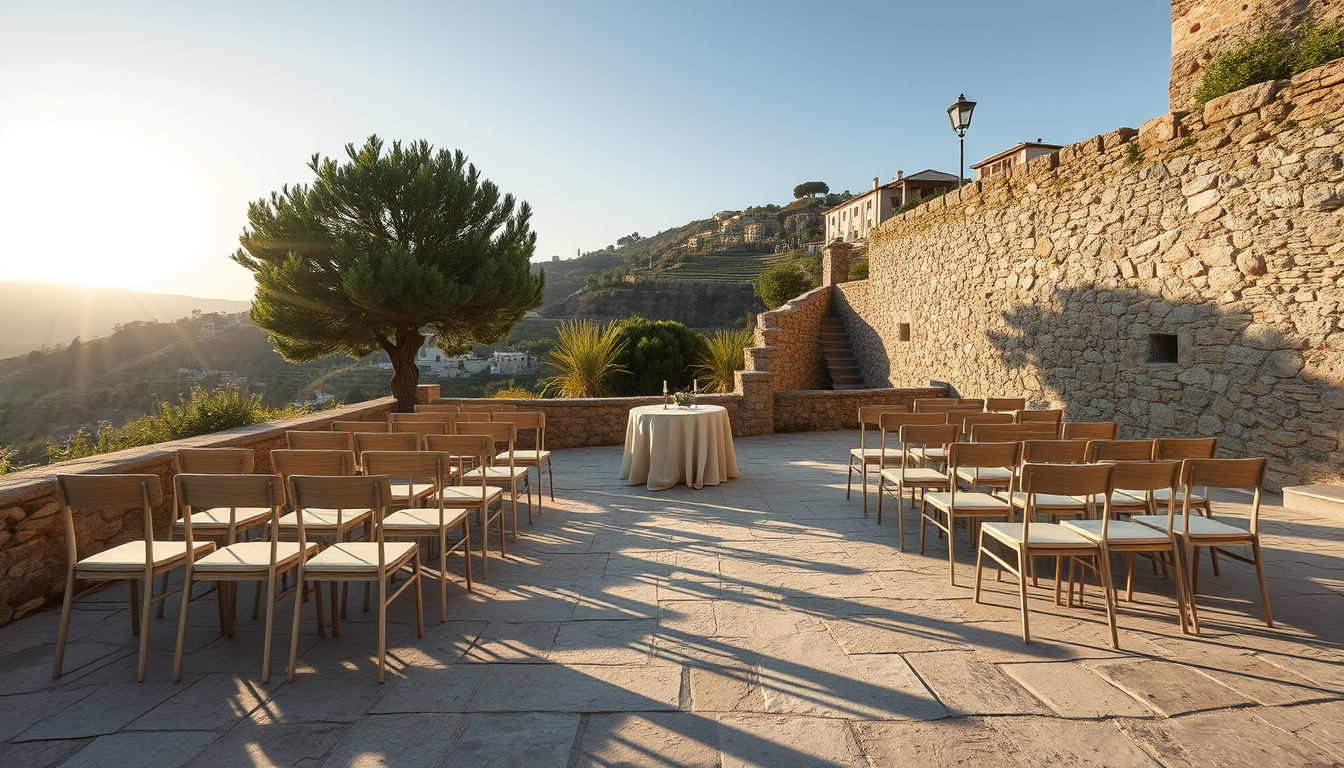
There is no single correct hour, and anyone who gives you one is guessing. In practice, the start time of a Sicilian wedding ceremony is decided by four things: how hot your wedding date is likely to be, where the sun will be, how long your dinner will run, and how your guests are arriving. Between June and early September most ceremonies work best in the late afternoon or early evening. In April, May, late September and October, a late-morning or midday ceremony becomes genuinely realistic.
Heat and light: the two constraints you cannot negotiate
Heat is about people. It decides how long your guests can comfortably sit or stand outdoors, how a heavy dress and a jacket feel in the early afternoon, whether older relatives will stay for the whole ceremony, and whether the musicians, florist and caterer can work properly in the conditions they meet. Light is about the photographs — and about the room or garden you have chosen for them.
In midsummer, the middle of the day is the least forgiving part of it: the sun is high, shadows are short and hard, and anyone facing the light will be squinting for the whole ceremony. In April, May, late September and October, those same hours are soft, and a midday ceremony stops being a compromise and starts being the better choice.
The two constraints are also connected to the space. A ceremony in deep shade, under a colonnade or inside a church behaves completely differently from one in an open garden at the same hour. Choose the hour and the space together, because one changes what the other can do.
What the ceremony hour does to your photographs
Two things matter more than the clock itself. The first is which way you and your guests will be facing as the ceremony begins. If the sun is behind your celebrant, you will be looking into it while you say your vows, and the photographs will show it. Turn the arrangement around, or move the ceremony to a later hour, and the same space becomes easy to photograph.
The second is what happens immediately afterwards. Late afternoon is usually the most forgiving light of the day: softer, warmer and lower, and far kinder to a long portrait session than the middle of the day. But that light arrives at a fixed time, and a ceremony beginning at the end of the afternoon can put your portraits directly against dinner, when your guests are already seated and you would rather be with them.
The same trade-off appears at the other end. Ceremonies that reach dusk finish in low light, so the frames made after them depend on flash or on the light of the reception itself. Just after the sun has gone there is a short window when a handful of photographs are worth making, but it lasts minutes. It has to be planned around rather than fitted in.
Work backwards from dinner, not forwards from the ceremony
Most couples settle the ceremony hour first and discover later how it landed on everything else. It is easier the other way round.
Sicilian wedding dinners are long: several courses, speeches, then dancing. That is the part of the day couples most often underestimate when they pick a time. An hour's delay in the morning is invisible. An hour's delay at the start of dinner moves the speeches, the cake and the first dance, and by then nobody can make it back.
So begin from the hour your venue and caterer can realistically serve, then subtract the ceremony, the photographs and the transfers between them — whatever those take in your particular case — and see what time is left for the vows. If the answer looks awkward, it is usually the ceremony hour that should move, not the dinner.
A midday ceremony also leaves a long gap before an evening dinner. Some couples fill it with a lunch; others find that guests drift back to their rooms, which works well when everyone is staying at or near the venue and poorly when they are spread across a town.
Two illustrative shapes to a Sicilian wedding day
The two sequences below are illustrative only. They depend on your date, your venue, your suppliers and the ages and energy of your guests. They are here to show how one hour cascades through a whole day, not to be copied.
A midsummer wedding, ceremony in the late afternoon
A spring or autumn wedding, ceremony around midday
The trade-offs are real, not decorative. The first shape keeps everyone out of the heat and puts the dancing after dark, but it crowds the ceremony and the portraits into the same few hours. The second gives you a slower, unhurried day and better light for photographs later, but it asks guests for a whole day rather than an evening, and it finishes earlier.
- Guests arrive as the worst of the heat is going, with drinks in the shade.
- Ceremony outdoors while there is still enough light for faces to read clearly.
- A short portrait session close to the venue, before the light drops too far.
- Dinner after dark, speeches between courses, dancing into the small hours.
- Ceremony in the middle of the day, in comfortable temperatures.
- A long lunch afterwards, with the afternoon free.
- Portraits later, when the heat has gone and the light has softened.
- Dinner and dancing earlier, which suits guests travelling home the next day.
Guests, transfers and the end of the night
Your guests are flying in, often from another time zone, and an hour that suits the two of you can be hard on them. If coaches or minibuses are moving people between a hotel and the venue, the departure times belong to the supplier and are not flexible on the day. On the islands they are set by ferry and hydrofoil timetables rather than by anyone's plan. Getting to Sicily covers how those transfers work in practice.
The same is true at the other end of the day. How late you can dance is not a photographer's decision, and it varies from place to place: a venue inside a town may be held to fixed hours, while one standing in its own grounds usually has more room. A late ceremony followed by an early finish is the worst combination available, and it is avoidable if you ask before you book, not after.
Where older guests or small children are part of the day, the length of the ceremony matters more than the hour. A short ceremony in shade at the wrong time of day is kinder than a long one at a perfect hour.
What to ask before you fix the time
Send these to your venue — and to your planner, if you are working with one — before the ceremony time goes onto a save-the-date:
The answers belong in writing. What to ask a Sicilian wedding venue before you book sets out the rest of the list, including the questions that only matter once a time is fixed.
- Which hours are permitted for a ceremony, and are they different for civil, religious and symbolic ceremonies?
- Is another event booked on the same day, and does that fix our timing?
- What will the light be like in the ceremony space at our hour, and is there shade where guests will sit?
- Can the ceremony move indoors or into shade, and how late can that decision be made?
- How long is the walk or transfer from the ceremony to dinner, and will guests be standing?
- What time does music have to stop, and is there any other limit on the evening?
- What time do guests realistically need to leave where they are staying?
Choosing the hour when you are planning from abroad
You cannot feel the heat from another country, and you cannot stand in the space at four in the afternoon to watch how it behaves. Ask for what you cannot test.
Request photographs of the ceremony space at roughly your hour and in your month — not a portfolio of the venue at its best — so you can see where the shadows fall. Ask the venue which hours they would recommend for your date, and ask why. Look at the months you are considering in the month-by-month guide, then use that to narrow the hour rather than starting from the clock.
It also helps to say plainly what you cannot move: a grandparent who needs to be seated before the ceremony, an early finish for guests with children, a dinner that has to start on time. A venue coordinator, planner or photographer who knows those constraints can suggest an hour that respects them rather than one that only looks good on paper.
Finally, the hour you choose changes how much of the day can be photographed at all. If the ceremony falls late and dinner follows immediately, the day is compressed; if it falls at midday, it stretches. It is worth reading how much photography a Sicilian wedding needs before you settle, because the two decisions affect each other.
If you are still deciding between a midday ceremony and an evening one, tell me your date, roughly where in Sicily you are marrying and what matters most to you about the day. I will tell you honestly what each hour would mean for the light, the timeline and the photographs.
Tell me your wedding date and location
Frequently asked
- What time do weddings usually start in Sicily?
- There is no standard hour. In July and August, the ceremonies I photograph are usually in the late afternoon or early evening, once the heat has eased. In spring and autumn, midday and early afternoon ceremonies are common and comfortable. Your venue's permitted hours and your guests' travel plans will narrow it further.
- Is a midday ceremony a bad idea in summer?
- In high summer it is the hardest hour of the day: strong overhead light, limited shade and guests in formal clothes. It is not impossible — a shaded courtyard, a colonnade or an indoor ceremony space changes everything — but if you want an outdoor ceremony and a long, unhurried portrait session, the late afternoon is usually kinder to both.
- How late do Sicilian weddings go?
- Dinner is long and dancing usually follows, so celebrations often run into the small hours. What ends the night is rarely the couple's preference and more often the venue's permitted hours and any music curfew. Ask for both in writing before you fix your ceremony time, because the two decisions are connected.
- Does the ceremony time change how much photography coverage we need?
- It can. A late ceremony with dinner immediately afterwards compresses the day into fewer hours, while a midday ceremony stretches it across a longer, slower day. List the parts you want photographed — preparation, ceremony, dinner, dancing — and choose the coverage from there.
Sources & further reading
Photographed across the whole island
See how a Sicilian wedding day is documented on the Destination Wedding Sicily home page, explore the location guides, or view the full Italian portfolio at rosariospadaro.com.
Check your dateKeep reading