Palermo Wedding Dinner: Seated, Long Table or Standing Aperitivo?
4 November 2026 · 8 min read · Rosario Spadaro
The meal is the longest block of a Palermo wedding day, and often the last decision couples make. A seated dinner, one long table and a standing aperitivo each change the hour you eat, how much your guests move, whether the best light of the day arrives while you are at the table, and how the evening ends. Settle the shape early — before the room, before the menu — and the rest of the day has something to build around.
Start with the two hours after the ceremony
The decision is not really about food. It is about what happens between the end of the ceremony and the first dance — a block that can run from forty minutes to four hours depending on how you serve it.
Three things are settled by that choice: how much your guests move, how long you spend sitting still, and whether the good light arrives while you are at the table or while you are free to walk out into it. The menu, the wine and the flowers all hang off it.
It is also the decision most often made last, after the venue is booked and the room has already narrowed the options. Ask about service style at the first viewing rather than the final one. Choosing a Palermo venue and choosing how you eat in it are two halves of the same conversation, because the kitchen, the courtyard and the hour you sit down are not independent of each other.
Three meal shapes, and what each one asks in return
Most venues in and around the city work with one of three formats. None of them is better in the abstract; each one buys you something and charges you for it elsewhere.
A seated dinner
Round or rectangular tables, a served menu, speeches between courses. It gives the day a spine: guests know when to sit, the room settles, and the evening becomes easy to time. The trade-off is stillness. A seated room yields quieter photographs — hands, faces, the table, someone listening — and fewer of the loose movement that a standing crowd gives you. It also asks more of the room itself: shade, moving air, and a genuine plan for a warm evening indoors.
One long table
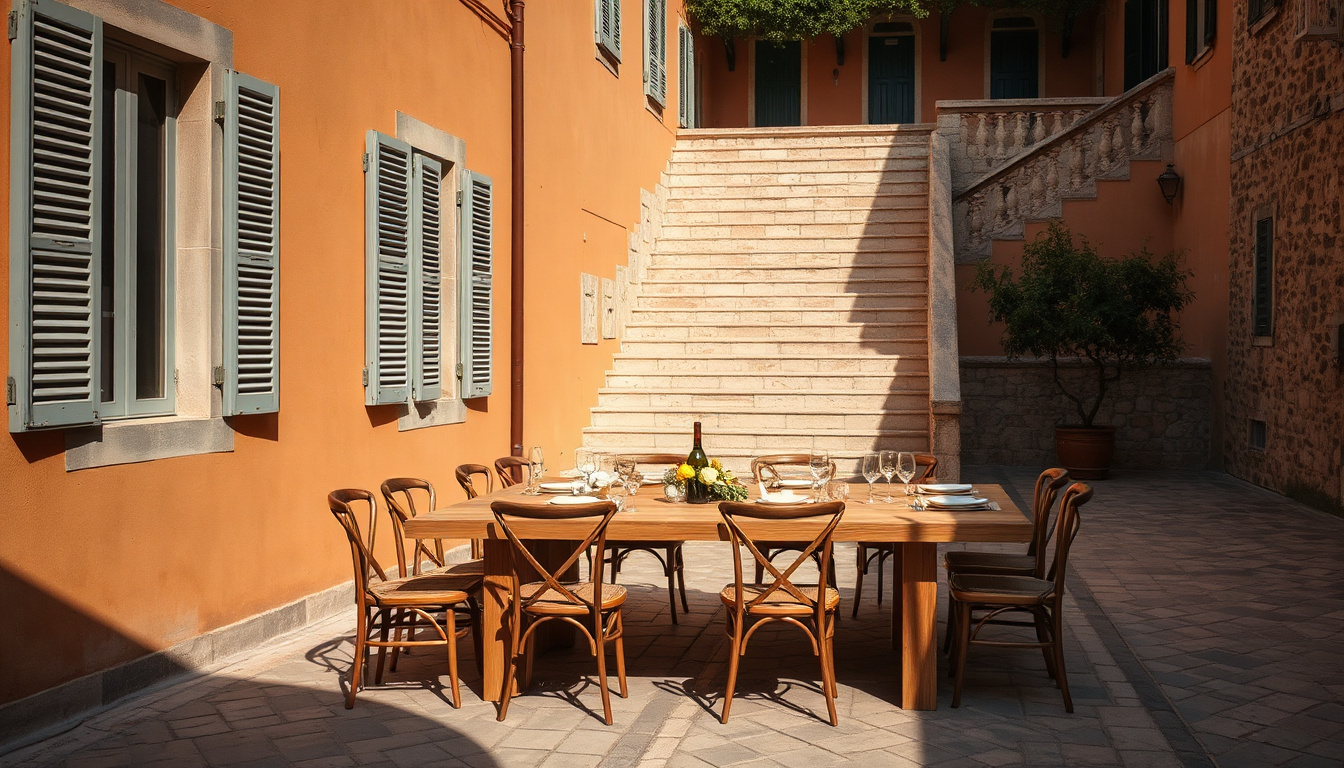
One conversation, one line of faces down a courtyard or a vaulted room, and a strong shape in photographs. It slows down at scale, though: service reaches the far end late, and speeches stop carrying past a certain number. Above a moderately sized guest list, a single table stops behaving like a table and becomes a corridor. It suits shorter lists and rooms that are long rather than wide.
A standing aperitivo with food stations
Movement, mixing, and an easier room for guests who do not know each other or who arrive with children. The costs are real. There is no natural moment for speeches, older guests are on their feet, and eating a plated dish standing up is awkward. Most couples who choose this format still add one seated course later, because it gives the evening a hinge and gives guests somewhere to land.
The light does not wait for the main course
The hour before the sun goes down is the part of the day you cannot move. It is also the hour a seated dinner most wants to claim. If your ceremony finishes in the late afternoon and dinner is served straight afterwards, the best light arrives somewhere between the first and second course, and someone has to decide whether the two of you leave the table.
Leaving is not fatal. Fifteen or twenty minutes in the street outside, or under the trees at the edge of the garden, is usually enough, and guests barely notice if the kitchen has been warned. What does not work is improvising: an unplanned exit during a served dinner tends to mean cold food, a distracted room and a photographer working against a timetable nobody agreed to.
There are three honest ways to resolve it.
Where you are also matters. A venue with an open horizon, such as the coast at Mondello, keeps usable light on the walls longer than a courtyard enclosed by tall buildings, where the sun leaves the upper floors early. Where and when to take wedding photographs in Palermo sets out how the city behaves through the day.
- Portraits before dinner. Use the aperitivo, or a short window straight after the ceremony, and let the meal run uninterrupted. This is the calmest option and the one I would choose for a summer date.
- A later dinner. Let the aperitivo carry the late afternoon and sit down as the light goes. You trade a long standing period for an uninterrupted portrait window, which suits a mixed-age guest list less well.
- After dark instead. Photographs in the blue hour and the lit city afterwards. Palermo is generous after sunset — stone, lamps, a piazza still busy — but the pictures are a different thing, and the day needs a little more time to allow for them.
Two illustrative evenings, side by side
These are illustrative shapes only. Your month, venue and ceremony hour will change them; they are here to show how the format moves the day, not to be copied across.
A seated dinner
A standing aperitivo with a seated course
- Ceremony in the late afternoon, once the worst of the heat has gone.
- Aperitivo outside while the dining room is finished, with portraits taken now, in the last of the good light.
- Guests seated as the light drops.
- Speeches between courses, before the room is too warm and too full.
- A short second portrait window at dusk — plates held, ten minutes, no announcements.
- Dancing, with the cake an hour or two later.
- Ceremony, then a standing aperitivo in shade, with drinks passed rather than queued.
- Portraits taken during the aperitivo, flexibly, without pulling you away from a table.
- One seated course later, once the heat has left the courtyard, which gives older guests a chair and the room a moment of quiet.
- Speeches after that course, when people are settled and can hear.
- Dancing and the cake, with the evening less tightly timed and more room for the unexpected.
Heat, older guests and the length of the sit
Palermo in summer is hot and humid, and the coast only helps once the sun is low. That has two consequences for the meal. The first is shade: a table set at the edge of a courtyard under trees photographs and feels very different from the same table in the open. The second is length. A room that is comfortable at the start of a long sit can be flat by the speeches.
A standing format looks like the answer to heat, and often is — but only for guests who can stand. Older relatives, anyone in heels on gravel, and parents with small children will find a long aperitivo harder than a chair. A mixed format usually serves a mixed list best: standing first, seated later. If your guests include people who need to sit down early, say so when you ask about service style rather than at the tasting. The guide to planning around older guests and small children covers surfaces, shade and transfers in more detail.
Questions to send the venue or caterer before you shortlist
A short, specific list gets a better answer than a general enquiry. These are the ones I would ask first.
Ask for the answers in writing. A reply you can re-read in February is worth more than a good impression in September.
- Who cooks and who serves: the venue's own kitchen, or an external caterer — and which external caterers does the venue actually allow?
- Is the menu priced per head with a minimum number of guests, and what happens if your final count falls below it?
- What is the latest hour the kitchen will serve, and does that differ between the aperitivo and the dinner?
- How many staff are on the floor for a room of your size?
- Where do the speeches happen, and is there shade, power and space for a microphone?
- If it rains, where does the meal move to — and does that space hold your whole guest list?
- What is the actual walk between the ceremony space, the aperitivo and the tables: steps, gravel, cobbles, a slope?
- How long does the room need to be turned around between the aperitivo and dinner?
What to confirm in writing when you are planning from abroad
Most of this can be settled by email if you ask precisely. Request the timeline from ceremony to first dance as the venue would run it, with the service format named. Ask who on their staff decides whether a course is held if you step away, so the answer does not depend on a conversation in a corridor. Ask for the layout drawn for your number, not for a photograph of a table set for a different wedding.
Two things are worth repeating back to them in your own words: when the space is yours, and what the rain alternative is for the meal specifically, as opposed to the ceremony. Choosing the ceremony hour shapes everything downstream, and the Palermo destination guide covers how the day tends to sit within the city.
What the format finally decides is how the evening feels in photographs: a room of faces turned towards each other, or a crowd moving between a courtyard and a bar. Both are honest records of a day. They are simply different records, and it is easier to choose the one you want before the menu is printed.
If you are weighing a seated dinner against something looser, tell me your date, the venue or area you are considering and how you picture the evening ending. I can tell you how each shape of evening tends to photograph, and what it asks of the timetable.
Check your date.
Frequently asked
- Can we have a seated dinner and still get portraits in good light?
- Yes, if the exit is planned. Either use the aperitivo for portraits before guests sit, or ask the kitchen to hold a course for fifteen minutes at dusk. What causes trouble is deciding it at the table, when the food is already served.
- How long should we leave between the ceremony and dinner?
- Long enough for guests to move, drink something and sit down without the room feeling rushed — but not so long that older guests and children are standing in heat. Ask the venue what their kitchen needs, then work backwards from the light.
- Will a standing reception work if we have older guests?
- Often, provided you add seating early and keep the standing period reasonably short. A mixed format — standing aperitivo, one seated course later — usually serves a mixed guest list better than all-standing or all-seated.
- Can we bring our own caterer to a Palermo venue?
- It varies. Some venues work only with their own kitchen, some hold a list of approved suppliers, some are flexible. Ask directly and get the answer in writing, because it decides the menu, the staffing and the service timings at once.
Sources & further reading
Photographed across the whole island
See how a Sicilian wedding day is documented on the Destination Wedding Sicily home page, explore the location guides, or view the full Italian portfolio at rosariospadaro.com.
Check your dateKeep reading