An Unplugged Ceremony in Sicily: Should You Ask Guests to Put Their Phones Away?
28 October 2026 · 7 min read · Rosario Spadaro
Most couples do not need a fully unplugged wedding. What actually spoils ceremony photographs is narrower than a phone in a pocket: it is a phone held out over the aisle at the moment you turn, or a bright screen in a dim church. So the useful question is not whether to ban phones, but which few minutes you want protected, who will say it out loud, and how you would like your guests to behave while you say your vows.
What a phone in the aisle actually costs you
Picture the geometry of a church ceremony in Sicily. Guests sit on both sides of a central aisle, and the people nearest that aisle have the clearest view — which is also where the urge to raise a phone is strongest, at exactly the moment you appear at the back.
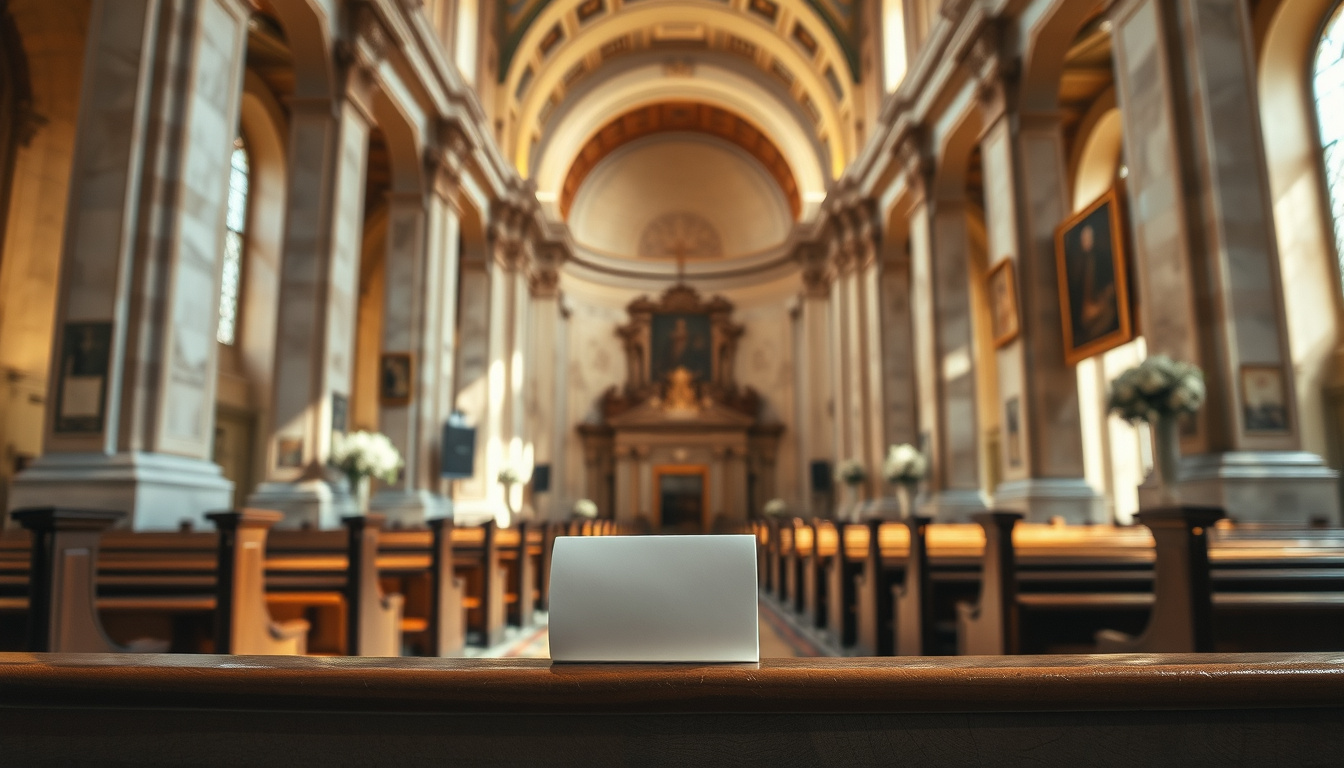
A raised phone sits at head height, and head height is where your faces are. In the baroque interiors of Palermo, or in the older churches of the Val di Noto, light usually comes from high windows and the aisle itself is dim; a screen then becomes the brightest thing in the frame and pulls the eye the way a lit candle would.
None of this is a guest's fault. They have travelled a long way, they are pleased for you, and nobody has told them what you would prefer. The photographs they take are mostly for themselves and rarely much use to you afterwards — although there are exceptions worth making room for.
The second cost is harder to photograph. When the front two rows are watching through a screen, you spend your vows looking at the tops of heads and the backs of phones. The frames that still work ten years later are almost always the ones where somebody is crying and nobody is holding anything.
Three ways to handle it, and what each one costs
There are three versions of this, and they cost you different things.
For most of the weddings I photograph, the middle version is the one that fits: it asks one small thing of your guests, gives them a clear beginning and end, and does not follow them into the evening. If your ceremony is short and your guest list is small, even that may be more structure than you need.
- Say nothing. Guests photograph freely. You gain their enthusiasm and a pile of shaky frames, and you accept that a few of your own ceremony photographs will have a phone or an arm in them. Plenty of couples are perfectly happy with this, and it is the default for a reason.
- The ceremony only. The request covers the processional, the ceremony and the exit, and then stops. Guests take their own photographs at the aperitivo, at dinner and on the dance floor, which is when they are least in the way. This protects the part of the day you have hired a photographer for and leaves the rest of the wedding to them.
- The whole day. Consistent, quiet and harder to hold. A long Sicilian dinner with no photographs of their own table leaves some guests uneasy, and you may find yourself wishing afterwards that you had the messy pictures from the dancing.
How to ask without making it a rule
How the request is made matters more than whether it is made. A sign alone at the church door is read by the first ten arrivals and walked past by everyone else.
Three things tend to work.
If your guest list is split between English and Italian, ask for the line in both languages, or ask a bilingual relative to repeat it. A request that half the room does not understand will be followed by half the room.
- Put it in print. One line in the order of service, or on a small card placed on each seat, reads at the moment a guest is settling rather than at the door.
- Have the person leading the ceremony say it. Ask in advance — by email, not in the sacristy five minutes before — whether they will include a short welcome line. It carries an authority a sign does not, and it reaches everyone at once.
- Give a named window rather than a ban. “Please take one photograph now, then put your phones away until we come back down the aisle” is easier to follow than an instruction with no edges, and it lets the guest who really wants a picture have one.
The minutes worth protecting
What follows is an illustrative shape, not a timetable. The ceremony you book will have its own order, and a symbolic ceremony will run differently from a Mass.
Four moments, perhaps fifteen minutes in total. Protecting those and leaving everything else alone is a far easier request than asking for silence all day.
- Guests arriving. No restriction needed. This is when people take the photographs that matter to them: the church, the flowers, each other in good clothes.
- The processional. The most obstructed minute of the day. Guests half-stand and turn, and the phones come up with them. A line said in the welcome beforehand is what keeps it clear.
- The vows and the rings. Quiet and close, and the moment a screen appears over a shoulder in the second row. Ask your witnesses to hold the rings and the bouquet rather than a phone.
- The exit and the confetti. Confetti needs two hands. If half the guests are filming, the throw is one-armed and lands short, and the frames you had in mind come out half-filled.
What it changes in the photographs
What you gain is simple: faces. A guest looking at you rather than at a screen, a front row that is present rather than recording, an aisle with nobody leaning into it.
What you lose is the guests' own record of the ceremony — the wobbly clip from the third row, the photograph your aunt took of your mother crying. If those matter, hand the job to one person openly rather than leaving it to whoever ignores the announcement. How much of the day you have photographed changes how much this matters: with a shorter coverage window, the ceremony and the portraits are almost the whole record, and obstructions count for more.
One practical note: if you plan to gather for family group photographs at a Palermo wedding straight after the ceremony, the request helps most in the ten minutes after the exit, when everyone is still in one place and would otherwise drift into groups of their own.
Family abroad, older guests and the quiet exceptions
There are almost always exceptions worth naming quietly rather than announcing.
A grandmother in another country on a video call, a sibling who could not fly, a friend filming for relatives who could not travel — give permission to one named person before the day. An announcement that invites negotiation will get it; a quiet word will not.
Older guests sometimes find a request like this puzzling, particularly if they have photographed every family wedding since the 1970s. It helps to say what you actually mean: that you would like to see their faces in the aisle. And if someone does raise a phone, let it go. The photographs will survive one screen, and a ceremony is not the place for correction.
Arranging it from abroad, and what to confirm
If you are arranging this from another country, the request is one of the few parts of the day you can settle in writing before you fly.
If the ceremony is a Mass, ask the parish what a photographer may and may not do during it. The answer varies between churches and it is better to know before your photographer travels across the island.
If you are still working out what your ceremony should feel like, and what you want left in the photographs afterwards, tell me your date, the town and roughly how many guests you expect. I can tell you where the light falls, how the aisle will look, and whether a request like this helps or just adds noise.
- Ask the person leading the ceremony, in an email, whether they will make the announcement and in which language.
- Ask the venue or parish who places cards on seats, and whether that is possible in the building at all.
- Tell your photographer what you have decided. It changes where I stand in the aisle, and how much I rely on guests staying in their seats.
- Put one line in any welcome note or order of service you are printing, so the request arrives before the day rather than at the door.
Frequently asked
- Do we need a sign at the church door?
- A sign is better than nothing, but it is the weakest of the options. Guests read it while walking, and anyone arriving in a group tends to miss it. One line in the order of service, plus a sentence from the person leading the ceremony, will do more than any printed board.
- Will guests be offended if we ask them to stop?
- Rarely, if the request is specific and short. What irritates people is a vague rule that seems to stretch across the whole day. Cover the ceremony only, say that you want faces in the aisle, and hand the rest of the day back to them.
- Can we still get guests' photographs of the day?
- Yes, and most couples end up with plenty from the aperitivo onwards. The ceremony is also the part guests see from a distance and photograph badly. If you want it covered from the third row as well, ask one person rather than leaving it open to everyone.
- Does this work the same way for a symbolic ceremony?
- It does, and it is often easier, because the person leading the ceremony is yours to brief. How a symbolic ceremony works — who speaks, in which language, for how long — changes what the announcement should say, so agree the wording with whoever leads it.
Sources & further reading
Photographed across the whole island
See how a Sicilian wedding day is documented on the Destination Wedding Sicily home page, explore the location guides, or view the full Italian portfolio at rosariospadaro.com.
Check your dateKeep reading