A Symbolic Ceremony in Sicily: How It Actually Works
7 October 2026 · 9 min read · Rosario Spadaro
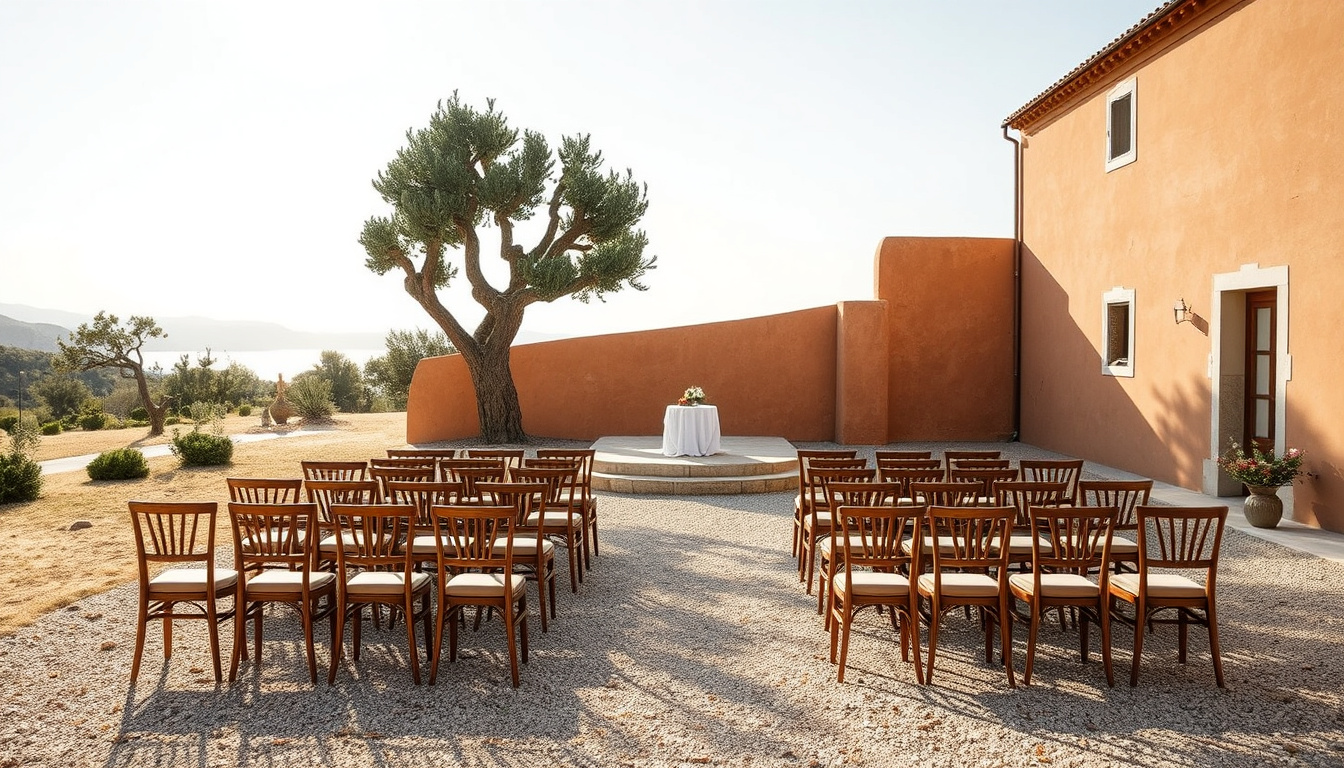
A symbolic ceremony in Sicily is a ceremony with no legal registration: you, an officiant, your guests and a setting you have chosen, usually a private villa, a palazzo courtyard or a garden. It is what many international couples actually plan, and it can happen almost anywhere the venue allows. What it cannot do is register your marriage, and that part is handled separately. Everything else — who leads it, what is said, how it is arranged for light and for your guests — is a decision you make.
What a symbolic ceremony is, and what it is not
In Italy, a marriage is registered in one of two ways: a civil ceremony at the Comune, or a religious ceremony that the Italian state recognises. A symbolic ceremony sits outside both. Nothing is registered, no legal status changes, and no documents follow from it.
That is the trade-off. The legal side has to be solved separately, usually by registering your marriage at home before you travel or by arranging a civil ceremony in Italy alongside the symbolic one. The guide to getting legally married in Sicily as a foreign couple covers the documents, the consular steps and the timelines. This article stays with the day itself.
What the symbolic route buys you is freedom. You are not tied to a Comune ceremony room or a parish calendar, you can choose who speaks and what is said, and you can hold the ceremony at the same place where you are having dinner. For couples bringing guests from several countries, that is often the deciding factor.
Who actually leads it
Because a symbolic ceremony is not a legal act, there is no standard officiant. In practice, couples choose one of three people, and each choice has a different consequence for the ceremony.
Whoever it is, ask the same questions. Who writes the words? Who holds the microphone? Which language is each part in? What happens if the officiant loses their place? Will they meet you before the wedding? If you are planning from another country, ask for the ceremony outline in writing and a short call. You are choosing a voice for the most important part of the day, and it is worth hearing it first.
- A celebrant. They hold the structure, the pace and the room, and can often work in more than one language. They will normally write the script with you and rehearse it.
- A friend or relative. This brings warmth that a stranger cannot, but usually needs support: a written script, a rehearsal, and someone to signal when to begin.
- Your planner. They know the day and can step in without friction, though they are also watching the kitchen, the transfers and the weather.
Where a symbolic ceremony can be held
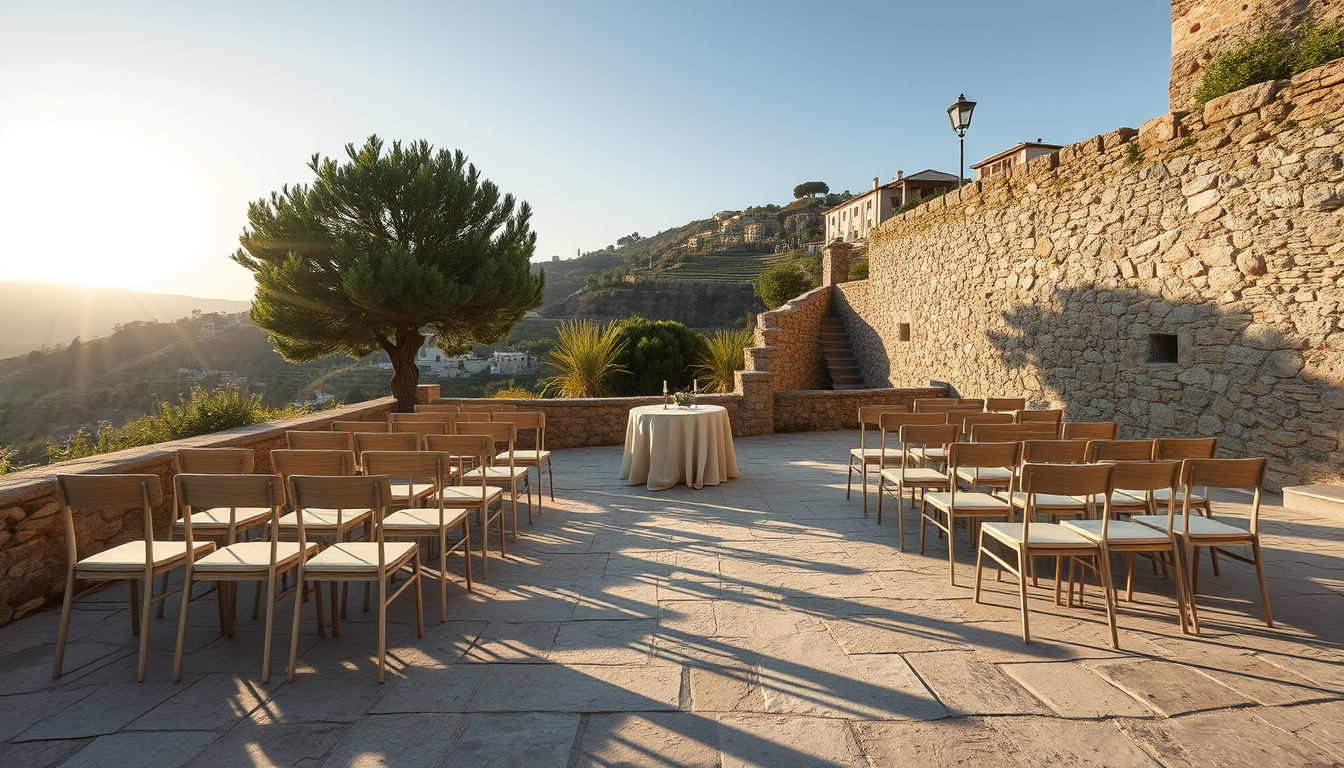
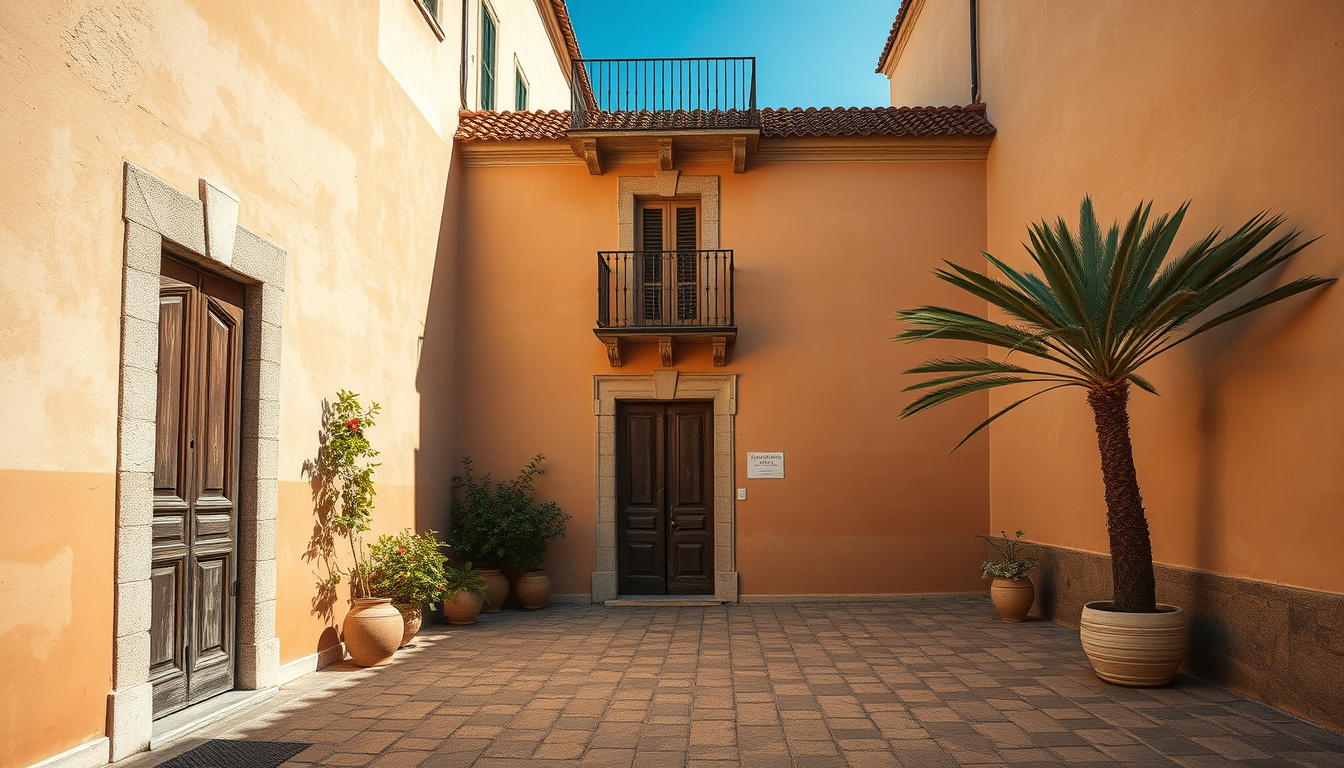
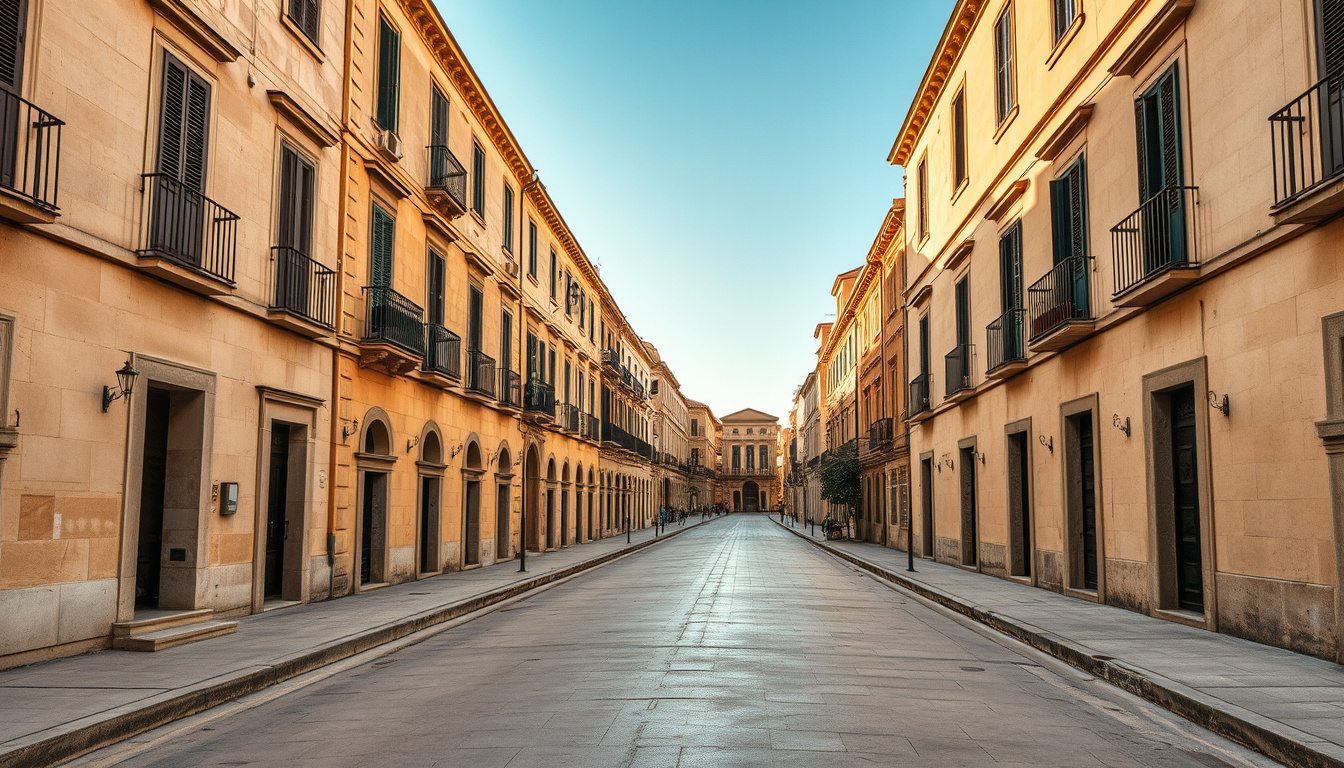
This is where Sicily opens up. Villa gardens, the courtyard of a historic palazzo, a terrace above the sea, an olive grove, a vineyard, a beach club, an island. Because no register office is involved, the geography is limited mainly by the venue and by how your guests will reach it.
Two conditions still apply. Private venues host symbolic ceremonies within their own rules — their hours, their music limits, their catering arrangements — so ask what they allow before you set your heart on a particular spot. Public and heritage spaces in Sicily generally require an authorisation requested well in advance, and who applies for it varies: sometimes the venue, sometimes the planner, sometimes you. Confirm that in writing rather than assuming.
The category of venue shapes the ceremony more than most couples expect: shade, background, guest seating, sound. The comparison of Sicilian wedding venue types sets out what each one asks of a ceremony, and it is worth reading before you commit to one.
What the ceremony usually contains
What follows is an illustrative shape, not a template. The content depends on you, on the venue and on who is leading it. But most symbolic ceremonies move through the same few movements.
Many couples also sign something: a keepsake certificate, a printed copy of their vows, or a book that guests sign afterwards. It carries no legal weight, but it gives the ceremony a physical pause, and it is one of the few moments when everyone in the room is watching the same thing at the same time.
The variable worth deciding early is length. A short ceremony is kinder to guests standing in July heat, but a very short one leaves little room for readings, music or a friend's words. If you want all three, plan the ceremony deliberately rather than leaving it to the day.
- Guests take their seats, and the ceremony space is quiet for a few minutes.
- The processional: one or both of you, with whoever walks beside you.
- A welcome from the officiant, often in both languages.
- One or two readings, sometimes chosen so that one is in English and one in Italian.
- Your own words to each other, spoken or read.
- The exchange of rings and a declaration of intent.
- A closing line, applause, and the exit — confetti, rice or petals, depending on what the venue permits.
Two languages, and guests who may not follow Italian
If your guests are arriving from three or four countries, the ceremony is where the language question becomes visible. There are three workable approaches: say everything twice, once in each language; split the ceremony so different people speak different languages; or keep the spoken ceremony in one language and print a short order of service with the readings and the vows in the other.
Whichever you choose, brief the people speaking. A reading delivered too quickly, or a vow spoken away from the microphone, is difficult for the guests and for anyone photographing them. Ask speakers to pause between sections, to hold the microphone towards their mouth rather than away from it, and to look up at the end rather than down at the page.
I work in both English and Italian, which matters less for the photographs than for the day itself. Knowing what is about to be said, and in which language, means I can be in the right place before it happens rather than moving during it.
How a symbolic ceremony is photographed
A symbolic ceremony is easier to photograph well than a formal one, for one reason: the arrangement is yours. There is no fixed altar, no registrar's desk, no choreography that has to be respected. That means you can decide where you stand and where your guests look, and those two decisions determine most of the photographs you will have of the ceremony.
What I would think about:
My own approach is documentary. I do not stop a ceremony to repeat a moment, and I do not ask anyone to look at the camera. A ceremony that runs as it should will give you more than a longer one that is managed for photographs — and you will spend it inside the moment, which is the point.
- The background behind you , seen from your guests' point of view rather than yours. A plain wall, a doorway or a line of trees will hold a ceremony; bright sea directly behind you will put your faces in shadow.
- The light at your hour. Open shade is forgiving and direct midday sun is not. If a sea view matters, choose a position where the light comes from the side rather than from behind. The ceremony start time changes this more than any other single decision.
- Where the officiant stands. Ask them to step to one side for the vows and the rings rather than staying between you and your guests.
- Movement. A ceremony where guests are free to stand, lean and turn gives you more than one where everyone is told to stay still.
- Phones. If you would like an unplugged ceremony, say so on the invitation and put a small sign at the entrance; guests are usually glad to be told. If you would rather not police it, ask two or three people to photograph and share, and leave the rest to me.
What to confirm before you book, especially from abroad
Send these questions to the venue, the planner and the officiant before you commit to a date.
It also helps to agree what happens in the minutes straight after the ceremony: where the aperitivo is, whether you are going for photographs immediately, and when your guests should expect you back. That short window is where ceremony and reception timings most often drift.
The questions to ask a Sicilian venue before you book cover the rest of the day — exclusivity, catering, music and weather plans — and most of them are worth sending in the same email.
If you are planning a symbolic ceremony in Sicily — a garden in the Val di Noto, a terrace above the sea, a courtyard in Palermo — tell me your date, your location and what you are imagining. There is no obligation either way, and it usually takes one conversation to know whether we are a good fit.
- Whether the ceremony is symbolic, civil or religious, and who is responsible for each part of it.
- Whether the venue allows an outdoor ceremony at the hour you want, and what the indoor alternative is.
- Any authorisation needed for the space, who applies for it, and how far in advance.
- Shade and light at the time you plan to marry: ask for a photograph of the space taken at that hour if you cannot visit.
- Guest access: steps, gravel, cobbles, distance from parking, and somewhere for older guests to sit.
- Sound: a microphone for the officiant, the readings and any music, plus any curfew that applies outdoors.
- Who speaks which language, and who will translate if a reading is not repeated.
- The plan if it rains, if the wind picks up, or if the temperature is higher than you expected.
Frequently asked
- Is a symbolic ceremony legally binding in Sicily?
- No. A symbolic ceremony registers nothing, so it does not change your legal status in Italy or at home. If you want to be legally married, that happens separately: a civil ceremony at the Comune, a religious ceremony the Italian state recognises, or registration in your own country. Your Comune and your consulate are the authoritative sources for your nationality.
- How long does a symbolic ceremony usually last?
- There is no fixed length, because nothing in a symbolic ceremony is prescribed. Couples usually keep it short: enough for a welcome, one or two readings and your own vows. If you want music, several speakers and a reading in each language, plan a longer ceremony deliberately rather than hoping it will stretch on the day.
- Can a friend or relative officiate?
- Usually, provided the venue agrees and the ceremony stays symbolic. Brief them properly: a written script, a rehearsal, a microphone, and someone who signals when to begin. In my experience a friend's officiating works when they have all three, and falters when they are handed a page of notes and no plan.
- Can we hold the ceremony somewhere other than the reception venue?
- Sometimes. Many couples hold the ceremony at the reception venue, which removes transfers and timing pressure. If you want a separate setting, a beach, a piazza or a garden, check whether it is private or public, and who applies for any permission. Public and heritage spaces in Sicily generally need authorisation requested months ahead.
- Do we need an officiant who speaks English?
- That depends on your guests more than on you. If most of the room speaks English, a bilingual officiant saves the repetition. If your families are mixed, repeating the key parts in each language usually works better than translating line by line, which slows everything down. Print the vows and readings in both languages as a backup.
Sources & further reading
Photographed across the whole island
See how a Sicilian wedding day is documented on the Destination Wedding Sicily home page, explore the location guides, or view the full Italian portfolio at rosariospadaro.com.
Check your dateKeep reading