How to Judge a Palermo Wedding Venue From Its Photographs
6 November 2026 · 7 min read · Rosario Spadaro
A venue's photographs are made to show the best version of a room: at a chosen hour, often styled, sometimes several years old. They are not dishonest, but they are selective. The useful question is not whether the room looks beautiful, because most do, but what the picture cannot tell you — how the space behaves at your ceremony hour, at your guest count, in your month, and on a wet day. This is a guide to reading those images properly, and then asking the venue for the ones that answer the question.
Start with what a photograph can actually prove
A photograph is reliable about structure. It will tell you the height of a ceiling, the pattern of a floor, whether the windows are tall and shuttered or small and high, whether there is a step between the ceremony space and the terrace. Those are fixed facts, and they are worth more than the overall impression the room makes.
What it cannot tell you is how the room behaves on your date, at your hour, with your guests inside it. Venue galleries are built around the frames where the place looks best. That is not dishonesty, it is selection, and the selection is the part you have to work around. Use the gallery to answer structural questions, then ask for everything else.
The hour is the thing the picture hides
The most useful fact about any photograph of a wedding room is the time it was taken, and it is almost never given. A space photographed at 11:00 and the same space at 19:30 can look like two different buildings, and a Palermo summer gives you both hours in the same day.
So ask which direction the ceremony space faces, what time the venue's own photographs were taken, and whether they can send the same room at your hour and an hour later. If the gallery shows long shadows across the floor and you are planning a midday ceremony, those images describe a different day from yours.
Two details are worth reading closely. The length of the shadows tells you roughly when the photograph was made. And if the lamps or candles are lit in a daylight image, the room needed help at that hour.
The empty room and the full room are two different venues
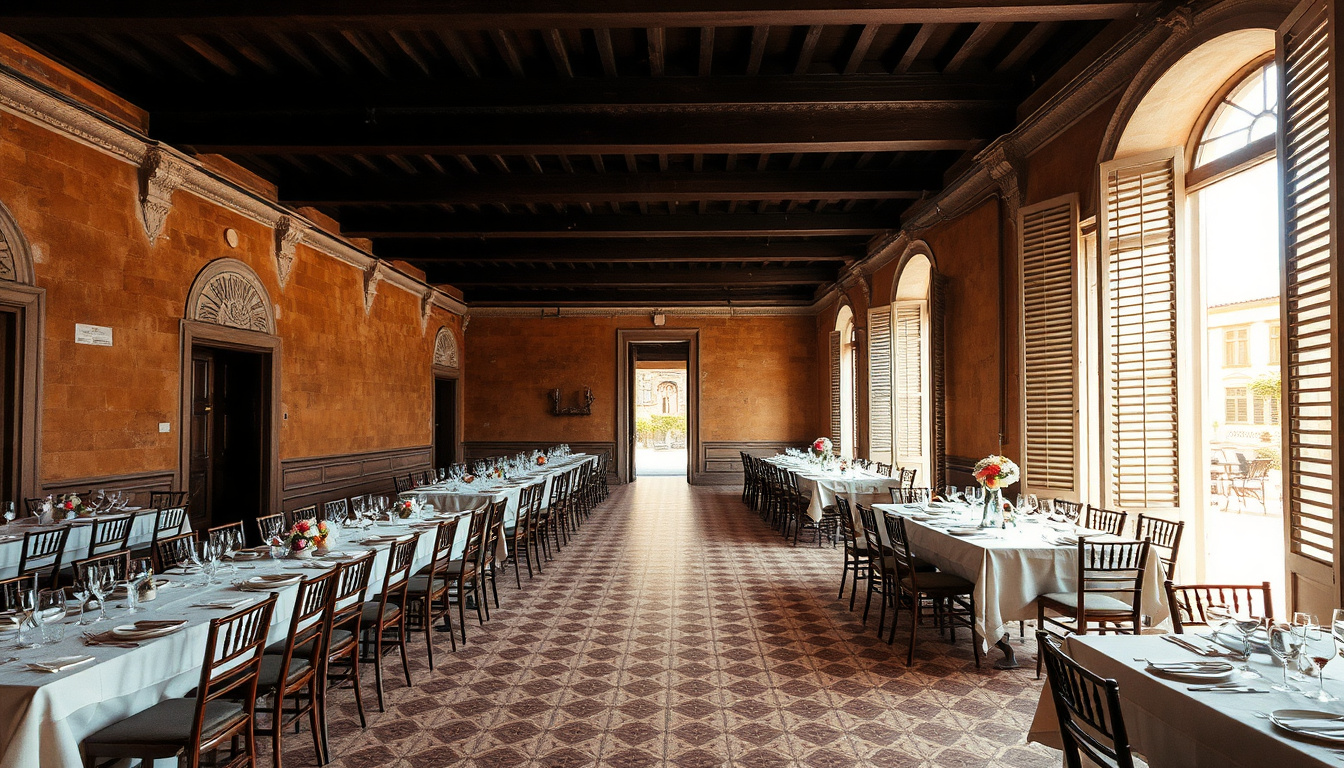
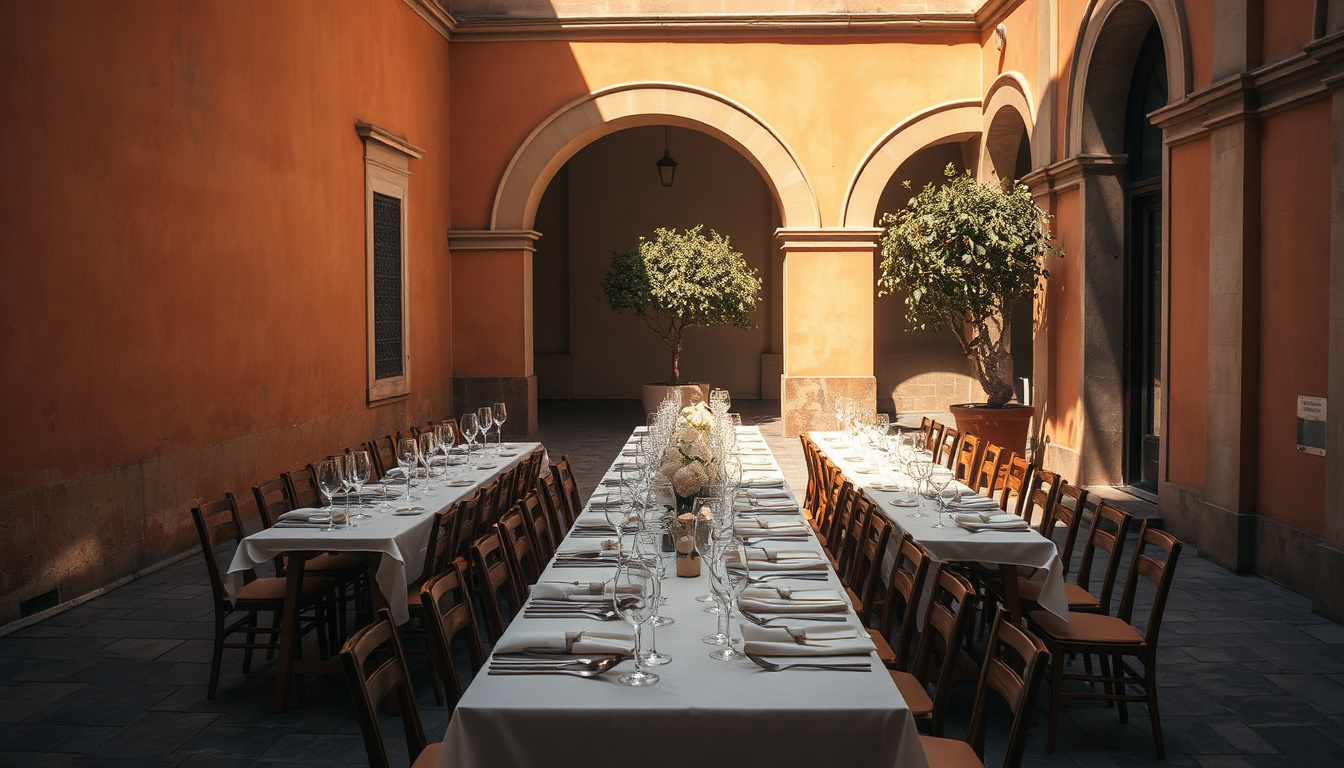
An empty sala with a single long table looks generous. The same room with a hundred and fifty chairs, a top table and a dance floor is a different building. Ask for the dining room set for a wedding at, or close to, your number, and ask for the layout drawing rather than another photograph — a drawing is much harder to flatter.
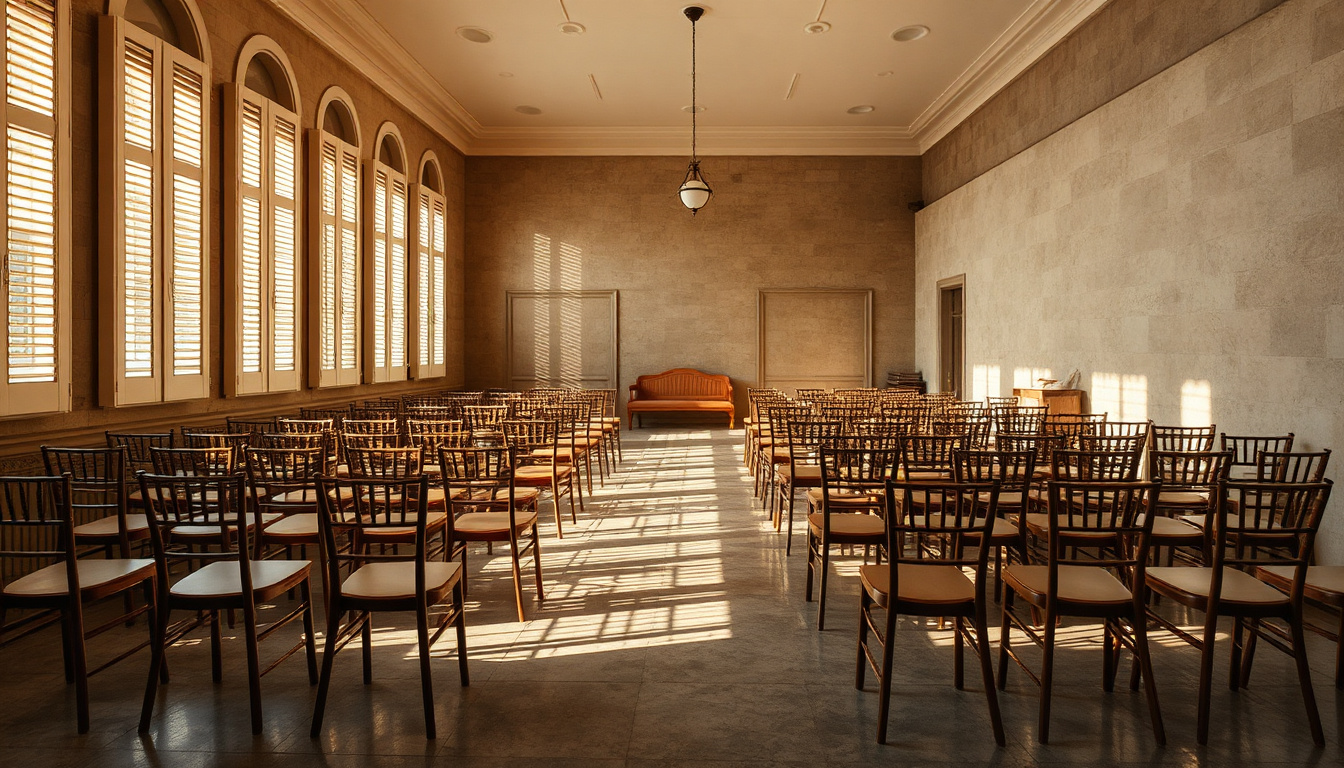
The same applies to the ceremony space, where chairs for sixty and chairs for a hundred and sixty ask different things of the same floor. If you want the fuller method for testing this, I have written separately about Palermo wedding venue capacity.
Wide lenses, borrowed flowers and the edges of the frame
Wide-angle lenses make rooms larger than they are. That is standard practice and not something to be cross about, but it is worth asking what else was in the room. Flowers, furniture and lighting in a venue's gallery sometimes belong to a planner who styled a shoot rather than to a wedding the venue hosted. It is a fair question, and venues generally answer it.
Then look at the edges of the frame rather than the centre. Whatever sits just outside the picture — a car park, a service door, a neighbouring wall — may be the background your guests sit in front of during the ceremony and the aperitivo. Ask for two views: the view from where you would stand, and the view back towards where you would stand.
Ask, too, for the approach. The entrance, the place vehicles stop, the walk a guest takes from the door to their seat: these are the minutes your guests actually experience, and they are rarely photographed.
The parts of the day nobody photographs
The half-hour after the ceremony is usually where a venue gallery stops. Ask where guests go while the room is turned around, whether that space has shade at the hour you would use it, and whether there is anywhere for older guests to sit down. An aperitivo terrace at midday and the same terrace in the evening are not the same decision.
Then ask about the room once the sun has gone, under its own lighting. Dinner by candlelight and a few uplighters is a very different photographic problem from a room lit like an office, and that difference is harder to correct than most couples expect. If your month can bring rain, ask for the indoor alternative as it would actually be set for your number, not a stock photograph of a ballroom that turns out to seat sixty.
A list of images to ask the venue for
Send one email and make it specific: the month or date, your ceremony hour, and your guest number. Then ask for these.
That last item is the most revealing on the list. A phone photograph is not trying to persuade you of anything.
- The ceremony space at your hour, and the same space an hour later.
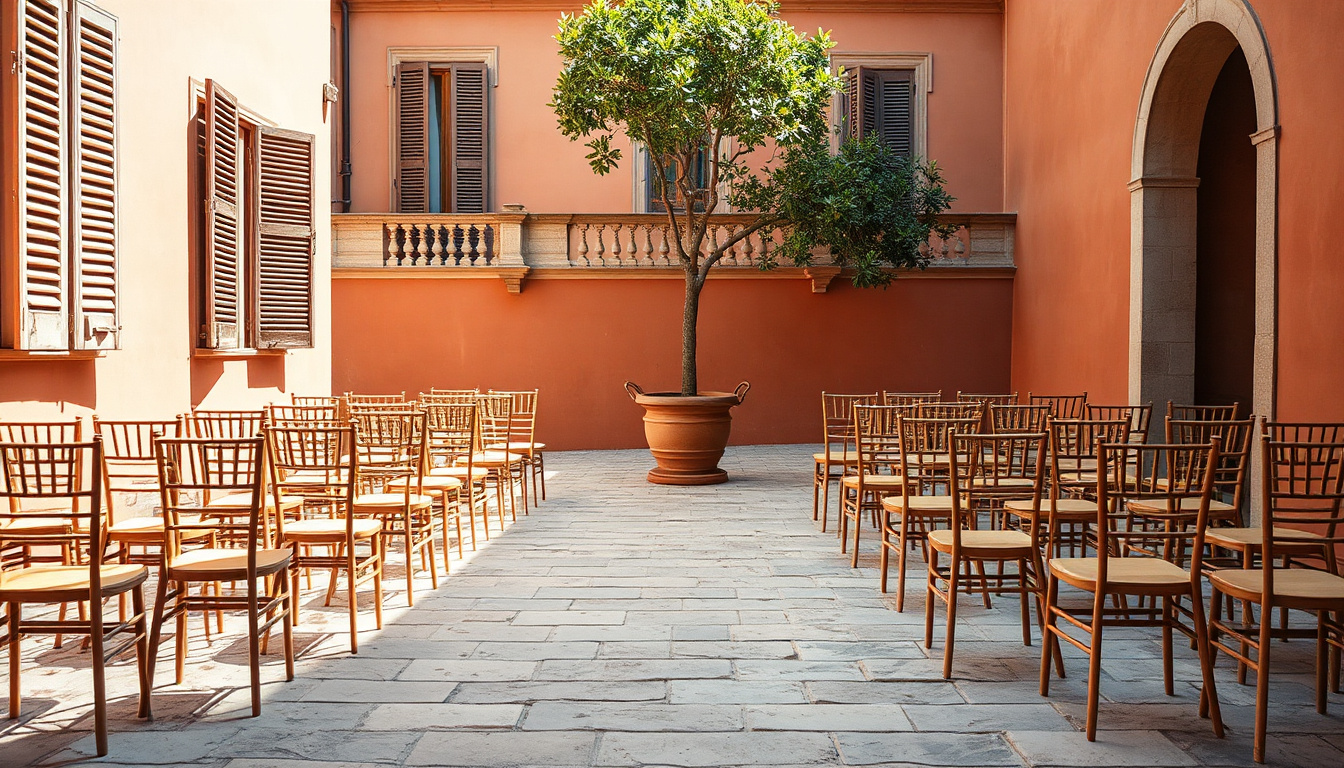
- The ceremony space laid out with chairs for your number.
- The dining room lit as it will be at dinner, without extra lighting brought in for the photograph.
- The room guests wait in between ceremony and dinner, at the hour you would use it.
- The wet-weather alternative, set for your number.
- The approach: entrance, drop-off and the walk to the ceremony space.
- The exterior at night, as guests will see it when they leave.
- One or two unedited phone photographs of the main room, taken by the coordinator at the hour you asked about.
What I look at first in a venue's photographs
When I look at a venue's images before photographing a wedding there, I look for four things. Where the light falls on the couple during the ceremony, and whether it arrives from the side, from behind, or straight over the roof. Whether there is shade within a few steps for the aperitivo. How the dining room is lit once the sun has gone. And what is behind the couple when they turn to face their guests.
None of this is about taste. It is about how much of the day can be photographed rather than managed, and these are exactly the questions a gallery is least likely to answer on its own. If you are choosing between two or three Palermo venues, this is the part of the comparison worth spending time on.
Asking for all of this from another country
Put the request in writing, in one message, with the three specifics attached, and keep the reply. If the venue sends professional photographs only, ask again for the phone ones. If the answer stays vague, treat the vagueness as information rather than as a refusal.
If you can travel once before the wedding, spend that trip on what pictures cannot answer: standing in the ceremony space at your hour, walking the drop-off route, and asking who will be your contact on the day. There is a fuller method for that visit in planning a trip to view Palermo wedding venues, and a list of written questions in what to ask a Sicilian wedding venue before you book. If you are still narrowing the shortlist, start with choosing a Palermo wedding venue that works.
If you are deciding between Palermo venues and want a photographer's read on the light in each, send me your date, the venues you are considering and roughly how many guests you expect. I will tell you what I would look at first, and what I would want to see before the date is fixed.
Check your date in Sicily.
Frequently asked
- Can I judge a venue from its Instagram account?
- As a first filter, yes. It shows the detail, the flowers, the table settings and how the place is styled. It rarely shows a whole room, and almost never at your hour. Use it to rule places out rather than in, then ask the venue for wide, unedited images at your ceremony time and guest count.
- Should I ask the venue for photographs at my ceremony hour?
- Yes, and be specific: month or date, hour and guest number. Ask for the ceremony space and the dining room. A venue that hosts weddings regularly should have such images. If it cannot produce any, that tells you something about how it documents and runs its own days.
- Do photographs from other couples' weddings help?
- They do, particularly from the same month. They show the day as it actually ran: chairs, shade, lighting, whether the room felt full. Look at several across different seasons, and remember that a wedding photographer also selects and edits, so you are still seeing a chosen version.
- Is a winter photograph misleading if I am marrying in July?
- It can mislead in both directions. Winter images may show a room warm and golden at an hour when your July ceremony would be in flat, hard light; summer images may show greenery and shade that will not exist in November. Always ask which month the photograph was taken.
- What if the venue will not send more images?
- Treat a vague or reluctant answer as information. Ask your planner, or a photographer who has worked there, and consider a video walk-through at your hour. Then list what remains unconfirmed and decide whether you are willing to manage it on the day.
Sources & further reading
Photographed across the whole island
See how a Sicilian wedding day is documented on the Destination Wedding Sicily home page, explore the location guides, or view the full Italian portfolio at rosariospadaro.com.
Check your dateKeep reading