Palermo Wedding Venue Capacity: Will Your Guest List Actually Fit?
19 October 2026 · 8 min read · Rosario Spadaro
A Palermo venue's headline capacity is usually the largest number the space can hold in any arrangement at all — not the number that leaves you a dance floor, an aisle and a route for staff carrying plates. Before you shortlist, ask for three separate figures: ceremony, seated dinner, dancing. Then ask for a layout drawn to your own guest count. If a venue cannot produce that, treat the number as unverified. What follows is how to test it properly, from another country.
Three numbers, not one
A capacity figure on a venue's website is usually the largest number the space can hold in any arrangement at all. It may be a standing reception with no tables in the room. It may be rows of chairs facing a temporary altar. Neither tells you what happens on the evening when the same four walls must seat your guests at dinner, leave space for a band, and keep a route open for staff.
Three separate numbers matter. How many guests can be seated for the ceremony . How many can be seated at dinner once tables, a dance floor and service space are in the room. And how many the room holds comfortably once everyone is standing and moving , which is the version of the room your guests will remember. The figure that should govern your planning is the smallest of the three, and it is often well below the headline number.
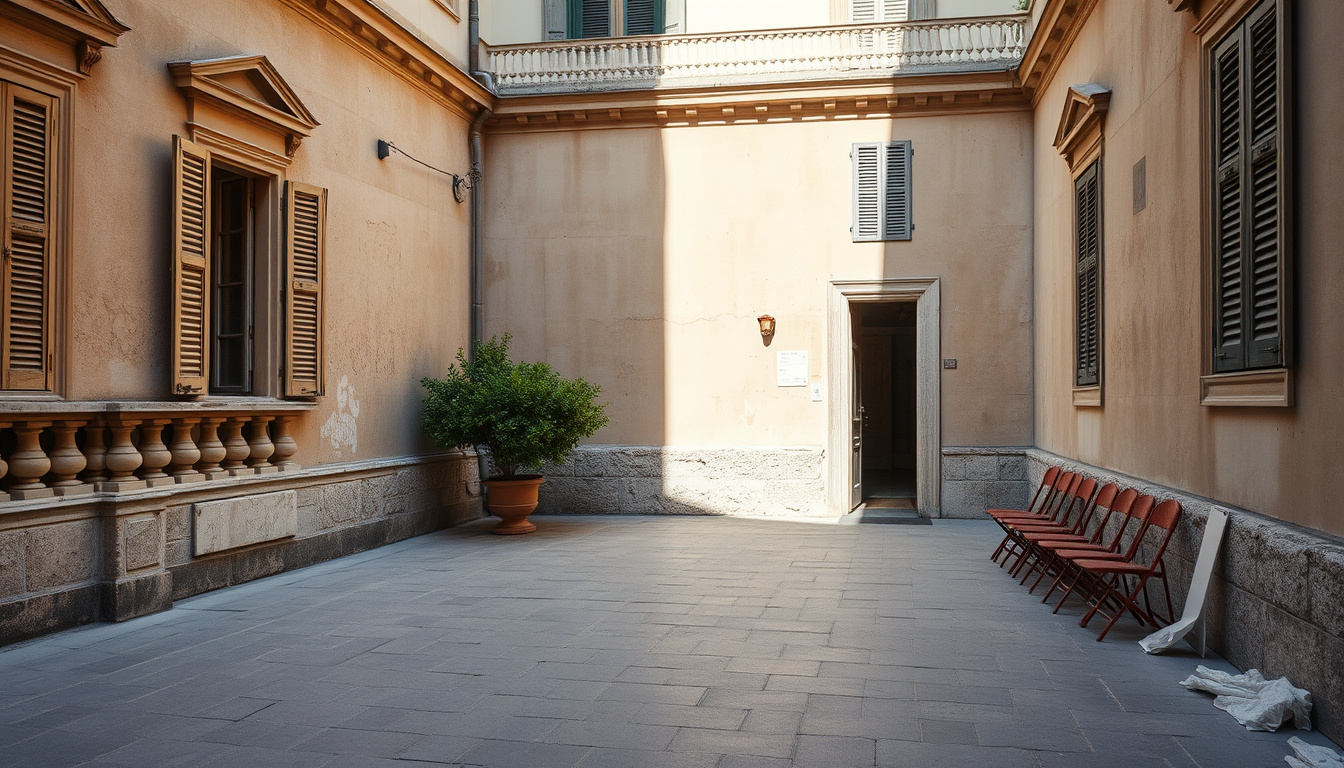
Palermo adds a complication. Many city venues are a sequence of rooms rather than one hall: a courtyard, a first-floor salon, a terrace, a garden behind the building. A palazzo might receive 180 guests across those spaces and still not seat more than 90 of them at dinner in any single one. If your guests are to eat together — and at a Sicilian wedding they usually are — then the room with the tables is the real capacity, whatever the total says.
What a full room does to the photographs
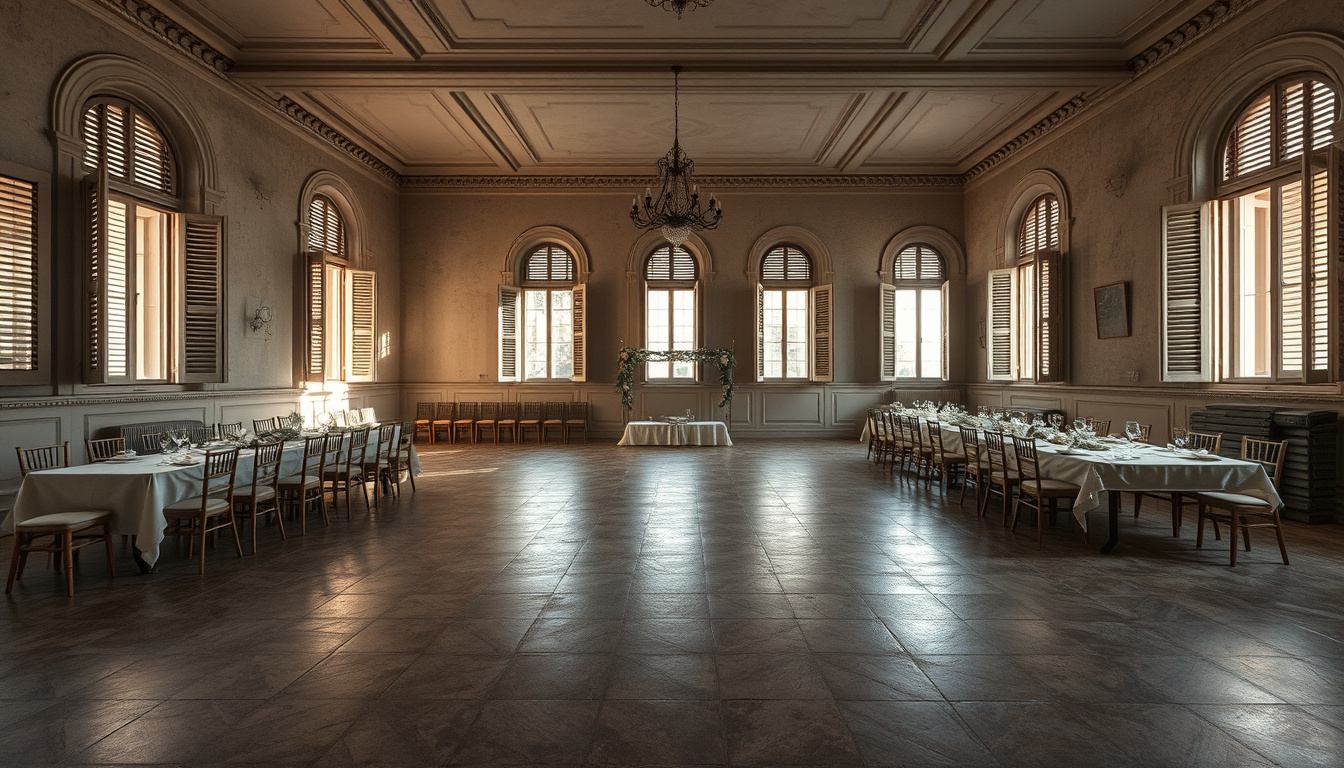
Almost every photograph of a venue you have seen was taken empty. Empty rooms are generous: light reaches the floor, you can stand wherever you like, and the architecture has room to be itself. A room set for a seated dinner for 120 is a different place.
Tall centrepieces break the line of sight across the tables. Window light you liked now falls on the backs of chairs. The aisle you imagined becomes a gap between two banks of tables that a photographer has to work along rather than across. None of this spoils a day; it decides where the pictures can be made and how much of the room can appear in them.
Two layout choices do more for the photographs than any decoration. A clear central floor, kept clear, gives you a first dance that reads as a dance floor rather than a knot of people between chairs. And tables that stop short of the windows keep the last of the evening light usable at the hour it is most valuable.
This is why I ask a venue for its plan rather than its number: the plan shows where the ceremony will be held, how long the room takes to turn around, and whether the portraits have to happen elsewhere while it does.
Ask for the layout plan, drawn for your number
A capacity figure is an answer to a marketing question. A layout plan is the working document. Ask for it drawn to your own guest count — not to the venue's maximum — and ask for it in writing, so it can sit next to the second venue on your list.
The plan should show:
That last point is worth a direct question. Ask which of their numbers is the licensed one, because that is the figure that will be applied on the day, whatever a brochure says.
- table shapes and sizes, and how many guests sit at each
- the dance floor, and the band or DJ position
- bar, buffet and cake table
- the route staff will use from the kitchen, and whether it crosses the room
- where the ceremony chairs go, and who clears them afterwards
- the ceremony-to-dinner turnaround, stated by the venue rather than assumed
- fire exits, and which figure the venue is officially licensed to hold
An illustrative comparison: the city palazzo and the villa with a garden
Two shapes come up again and again in Palermo, and they fail in different ways. What follows is illustrative rather than a description of any particular venue.
A palazzo in the centre. Guests arrive into one room, the ceremony happens in another, dinner is upstairs or across a courtyard, and dancing ends up wherever the music is allowed. The capacity that matters is the smallest room in that chain. Weather barely touches the day and the interiors carry the photographs after dark; the cost is circulation. Staircases, thresholds and a route your older guests will walk more than once.
A villa with a garden. Ceremony under trees, aperitivo on the lawn, dinner under a permanent structure or cover, dancing outside. Here the capacity that matters is the covered space, because that is what the day falls back on. The advantage is room to breathe and a long evening outdoors; the cost is the walk between garden and tables — gravel, steps, uneven stone — and a rain option often smaller than the garden it replaces.
Write one number beside each venue: how many guests can be seated at dinner, under cover, at the same time. Compare those.
The rain plan has to hold the same number
The most common capacity failure is not the wedding day. It is the wet-weather version of it. A garden that seats 140 in the open may have an indoor room for 80, and nobody notices until the week of the wedding.
Ask to see the wet-weather layout drawn for your guest count, and ask who decides to use it and by when. A plan without a named decision-maker and a deadline is not a plan. There is more on this in the guide to rain on a Sicilian wedding day.
Questions to send before you shortlist
Keep these specific to space and numbers. The wider questions about catering rules, music curfews and exclusivity belong in what to ask a Sicilian venue before you book.
- How many guests can be seated at dinner in one room, with a dance floor and service space?
- How many can be seated for the ceremony in the same space?
- What is the licensed occupancy for each room we would use?
- Can you send the dinner layout drawn for our number?
- How long does the ceremony-to-dinner turnaround take, and whose staff does it?
- Where do guests go while the room is reset?
- What is the wet-weather layout, and how many does it seat?
- Which room is used for dancing, and until what time?
How to test all of this from another country
You do not need to fly to Palermo to learn whether a room works. You need documents.
Sound and heat are the two things a plan cannot show you. Hard floors and plaster walls carry noise, which matters if you are planning speeches. And a room that is comfortable at eleven in the morning may be stifling at five in the afternoon in July. Ask where the fans or air conditioning are, and whether the windows open.
If you can travel once before the wedding, visiting Palermo venues explains how to ask for the right things in advance so the trip is for looking rather than asking. If you cannot, choosing a Palermo venue that works covers the wider shortlisting decisions, and a planner or a photographer who has worked in the room can often tell you in one sentence what a floor plan cannot.
- Ask for the floor plan as a file you can print, with a scale on it, so you can measure the space between tables rather than guess it.
- Ask for a short video walk from the drop-off point to the ceremony room and on to the dinner room. Where guests enter is part of the capacity question.
- Ask for the room photographed set for a dinner at roughly your number, rather than empty.
- Ask what the room is like at your ceremony hour, not at noon.
If your guest list is still moving
Most couples are working with a range at this stage, and a range of twenty is normal. Ask the venue three things: the minimum number they will accept, the date by which your final count is due, and what happens to the price if you fall below the minimum or rise above it. Ask, too, whether the room changes if your number does. A venue that moves you to a smaller salon at 80 guests is offering something better than a vast, half-empty hall.
Then look at where your number sits inside the room. A space that holds 150, with 100 guests in it, feels generous and photographs with air around the tables. The same space at 145 feels tight, and the evening will be warmer and louder. If you are near the ceiling, ask what the room is like when it is full.
If you are weighing two rooms and cannot tell which one will hold your day properly, send me the date, the location and roughly how many guests you expect. Tell me what matters most — dinner all together in one room, dancing until late, or a short walk between the ceremony and the tables — and I will tell you what I would want to see before you commit. Check your date.
Frequently asked
- Is the venue's stated capacity the number we can seat for dinner?
- Usually not. The headline figure is normally the maximum in any arrangement, which may be a standing reception. Ask for the seated dinner number with tables, a dance floor and service space in the room, and ask for the layout drawn to your own guest count rather than the venue's maximum.
- Can the ceremony and the dinner happen in the same room?
- Often yes, especially in smaller Palermo venues. What matters is the turnaround: who clears the chairs, how long it takes in the venue's own words, and where guests go meanwhile. In a palazzo, an aperitivo in another room usually covers it comfortably.
- How do we check capacity without visiting Palermo?
- Ask for a scaled floor plan drawn to your number, a short video walk from the entrance to the dinner room, and the licensed occupancy figure in writing. Request photographs of the room set for a dinner at a similar number, rather than photographs of it empty.
- Does a smaller guest list open up more venues in Palermo?
- Yes. Smaller numbers make city rooms workable that would otherwise be too tight, and ease pressure on stairs, transfers and the rain plan. The constraints do not disappear, though: surfaces, heat and the walk between ceremony and dinner still shape the day.
Sources & further reading
Photographed across the whole island
See how a Sicilian wedding day is documented on the Destination Wedding Sicily home page, explore the location guides, or view the full Italian portfolio at rosariospadaro.com.
Check your dateKeep reading