Family Group Photographs at a Palermo Wedding: How to Plan Them
20 October 2026 · 7 min read · Rosario Spadaro
The most useful thing you can do about family group photographs at a Palermo wedding is to decide, in advance, who is in them and when they happen. Left to the moment, they swallow the aperitivo: guests drift towards the bar, older relatives stand in the sun, and someone goes looking for a cousin. A short written list, a fixed window, a place chosen for shade and one person to call the names will get them done quickly — and give the rest of the day back to you.
What actually goes wrong, and why it is rarely anyone's fault
Almost every wedding I photograph has a moment, usually twenty minutes after the ceremony, when somebody remembers the family photographs. By then the guests have found the bar, the older relatives have taken the only patch of shade, and a cousin has walked off towards the view. What follows is a search party rather than a photograph session.
It is rarely anyone's fault. A Palermo wedding day moves fastest at exactly the point where group photographs are meant to happen. The ceremony ends, the congratulations begin, and the room empties towards the aperitivo. If the list has not been written beforehand, it gets written in the middle of that movement.
The remedy is unglamorous: a short written list, a fixed window, a position chosen for its shade, and one person whose job is to call names. Everything below is about those four things.
Build the list around combinations, not categories
Most lists arrive as categories — aunts, uncles, cousins, friends — and categories are impossible to gather. Write names instead, and order them so that the same people are not called forward four separate times.
An illustrative list, which you should cut down rather than copy:
A dozen frames covers most families comfortably. Beyond that you are asking guests to stand in the heat for longer than they expect, and you are away from your own reception. If two photographs can be combined — the cousins inside the wider family frame, for instance — combine them. The list is a plan for the day, not an archive.
- Both immediate families together, in one frame, before anyone moves
- Each side of the family separately, taken in sequence so nobody is gathered twice
- Grandparents and older relatives, seated, photographed first while they are fresh
- Siblings and their partners, one frame per side
- Witnesses or godparents
- Small children, early, before the day has tired them
- Friends, later, once the party has started and nobody minds being pulled away
The hour: straight after the ceremony, or into the aperitivo
There are two sensible windows, and both involve a trade-off.
Straight after the ceremony. Everyone is still in one place and still dressed for it, and the emotion of the last ten minutes is on their faces. The cost is that you lose the first quiet minutes together, and in high summer you may be standing outside in the hottest part of the afternoon. If you take this window, keep it short and let the venue know in advance so a shaded corner or a reserved space is ready.
During the aperitivo. Guests have a drink in hand, the light has begun to soften, and the mood is easier. The cost is dispersal: people drift towards the food, the view or the sea, and every frame takes longer to assemble. It works best when the venue has a defined area where guests naturally stay.
Whichever you choose, name the hour in advance rather than leaving it to the day, and let the people on the list know through your planner, your master of ceremonies or a small note. Guests forgive a five-minute interruption they were expecting; they find an improvised one irritating. The ceremony hour shapes everything downstream, so choosing your ceremony start time is worth settling before you fix the window for photographs.
Choose the place by shade and even light, not by the view
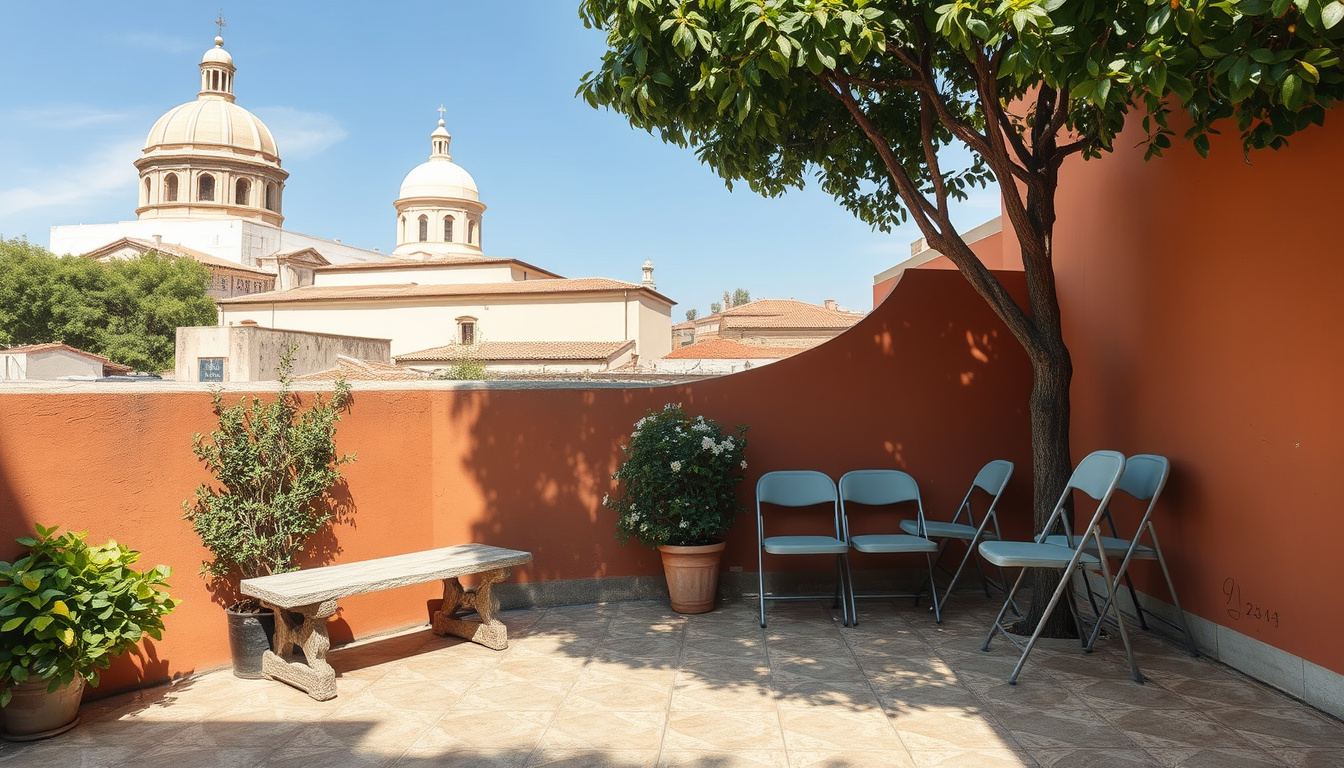
The most photogenic corner of a Palermo venue is often the worst place to stand twenty people. A terrace with a panorama usually means hard sunlight, a low wall and a narrow strip of usable floor. What works better:
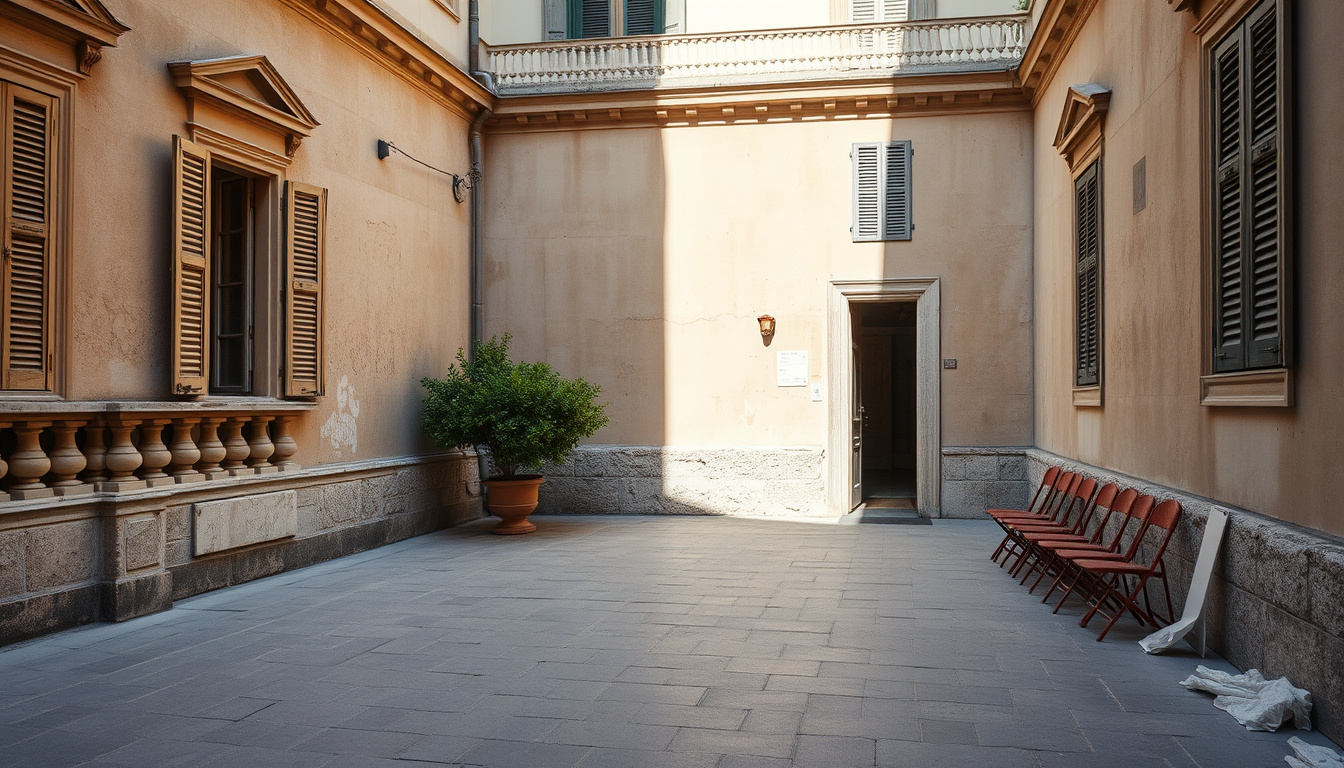
In the historic centre, space is the constraint. Some streets and squares are busy from mid-morning and much busier in the evening, and twenty people standing still will collect pedestrians in every frame. Villa gardens and courtyards are easier; a city palazzo may give you an outdoor space that is ideal at one hour and dim at another. Ask the venue which space is in shade at your ceremony hour, and look at it yourself if you can. If you are planning portraits as well as group photographs, where and when to take wedding photographs in Palermo covers the city location by location.
- Deep, even shade — under trees, in a courtyard, beneath a portico — where nobody squints
- A plain wall or a dark doorway behind the group rather than a busy street
- Steps or a gentle slope, so a large group can stand in two rows without heads disappearing
- Enough room for the whole group without standing in a road, a doorway or a service entrance
One person has to call the names
This is the single thing that decides whether the list takes a few minutes or most of the reception. The photographer should not be the person shouting into a crowd: I work quietly, and I would rather not spend your aperitivo calling for an uncle who has gone to move the car. Give the job to someone with a loud, friendly voice — a sibling, a witness, an usher or your planner — and give them the list on paper or on a phone.
Brief them properly. They need permission to interrupt conversations, to move people gently, and to start with any frame that involves someone likely to leave early. Tell them which frames matter most, so that if the day runs late, the essential ones are done and the optional ones can be dropped without discussion.
Ask the venue coordinator, too, whether they can keep the space clear for that window. A courtyard that fills with aperitivo tables at seven o'clock is not available at half past seven.
Older guests, small children and a long hot day
Photograph the oldest and the youngest first. Older relatives should be seated, in shade, and photographed before the day has tired them; small children are best caught early, while they are still willing. If a grandparent plans to leave before dinner, their photograph cannot wait until after the speeches.
The care that makes the day comfortable also makes the photographs easier. Planning around older guests and small children covers seating, surfaces and the shape of the day in more detail. Photographically, an unhurried relative in shade photographs better than a hurried one in the sun, and a child who has been allowed to run about comes back to the frame more willingly than one who has been told to stand still for an hour.
What to send before the day, from another country
You can organise all of this from the UK, the US, Germany, Australia or Canada without visiting, provided you send one document rather than a series of messages. I ask couples for a single page containing:
Send it a few weeks before the wedding rather than in the week itself, and copy your planner and the venue. Ask the venue two questions in the same email: which outdoor space is in shade at that hour, and whether it can be kept clear for a short window. If the forecast turns, a written rain plan should already say where the group photographs move to — a portico, a staircase or a room with space for the whole list.
If you are planning a wedding in Palermo and would like the group photographs to take a few minutes rather than an afternoon, tell me your date, the venue and roughly how many people will be standing in the frames. Send me your date and location and we can talk it through before your schedule is fixed.
- The names on the list, in the order you want them photographed, with relationships noted
- Who the gatherer is, and how to reach them on the day
- The window you prefer, and a fallback if the ceremony runs late
- The shaded position the venue has suggested, and a wet-weather alternative
- Any family detail that should shape the arrangement — a recent bereavement, a separation, two people who should not be asked to stand together
- The frames that must happen, and the ones that can be dropped
Frequently asked
- How many family group photographs should we plan for?
- A dozen covers most families, and fewer if you combine them. The useful test is whether you would print each one. Anything beyond that adds gathering time and takes you away from your guests, so it is better to cut the list in advance than to abandon it halfway through.
- Should the group photographs happen before the ceremony instead?
- It can work if guests arrive early and the venue has shade nearby, but it usually means being photographed twice and arriving at the ceremony having already done the work. Most couples prefer one window after the ceremony, while everyone is still together, and leave the friends' frames until the evening.
- Do we need to give the photographer a written list?
- I would rather have one. I photograph quietly and I am not going to shout names across a courtyard, so a written list and a named gatherer do more for the photographs than any amount of direction from me. Send it a few weeks ahead and I will work through it in the order you set.
- What happens if it rains during the group photographs?
- Move them to the covered space agreed in your rain plan — a portico, a wide staircase or an interior room that holds the whole list — and take the oldest and youngest guests first. A plan settled with the venue before the day is worth more than improvisation in the moment.
Sources & further reading
Photographed across the whole island
See how a Sicilian wedding day is documented on the Destination Wedding Sicily home page, explore the location guides, or view the full Italian portfolio at rosariospadaro.com.
Check your dateKeep reading