Rain on a Sicilian Wedding Day: How to Plan Around the Weather
15 October 2026 · 7 min read · Rosario Spadaro
You cannot book a dry day, and no venue can promise one. The useful work is a written plan agreed before you pay a deposit: which indoor space takes your whole guest list, who makes the call to move indoors, and how late that call can be made. Your photographs, your guests' comfort and the shape of the day all follow from those three answers.
What a wet-weather plan actually has to decide
A rain plan is not a list of indoor rooms. It is three decisions, and they need to exist before you sign anything.
Where everyone goes. Either the venue can hold the ceremony, the aperitivo and dinner indoors without splitting your guests across two buildings, or it cannot. That single fact shapes how much of the day survives a wet afternoon and how much has to be rewritten.
Who decides. Somebody has to make the call, and it should not be the two of you at eleven in the morning, half dressed, fielding messages from guests. Usually it is the venue's coordinator together with a planner or a trusted family member, working to an agreed time.
By when. There is a moment, usually a few hours before the ceremony, after which moving indoors is no longer achievable. Ask the venue what that moment is in their experience and treat the answer as the deadline.
The trade-off is straightforward. A venue that can absorb the whole day indoors costs you nothing when it rains and asks for no second plan. A venue that cannot — a terraced estate, a garden, a terrace above the sea — will usually give you better photographs and a better evening, but you will need a written alternative and probably a covered structure. Neither choice is wrong. It matters only that you know which one you are making.
Does the indoor space fit your whole guest list?
The number you need is not the capacity on the venue's website. It is how many people the indoor room seats at tables with a dance floor, a band and space to move between courses, because that is what a wet evening requires.
Ask for these answers in writing, and ask for photographs of the room both empty and set up for a wedding:
Rooms that look generous when empty can turn out to be tight once they hold a long table, a hundred guests and a dance floor. This is one of the rare cases where an empty photograph misleads you. Ask for the room in use.
- How many guests does the indoor space seat for dinner, and how many for a ceremony?
- If the ceremony moves inside, where do the musicians, the flowers and the aisle go?
- Is there a covered terrace or loggia for the aperitivo, or does everyone move straight into the dining room?
- Can you send photographs of the room laid out for a wedding, not the room empty?
- How is that room lit in the evening, and is the lighting adjustable?
What rain does to the photographs
Rain is rarely the problem photographers fear. Overcast light is soft and even, it fills in the shade that is hard at midday in July, and wet limestone and lava stone hold colour beautifully. The difficulties are elsewhere.
They are about movement and time. A wet day slows everything: cars queue at the same drop-off point, guests gather under the smallest available roof, stone is slippery underfoot, and the twenty minutes you had allowed between the ceremony and the portraits quietly disappears. When a plan is improvised on the day, the photographs absorb the delay.
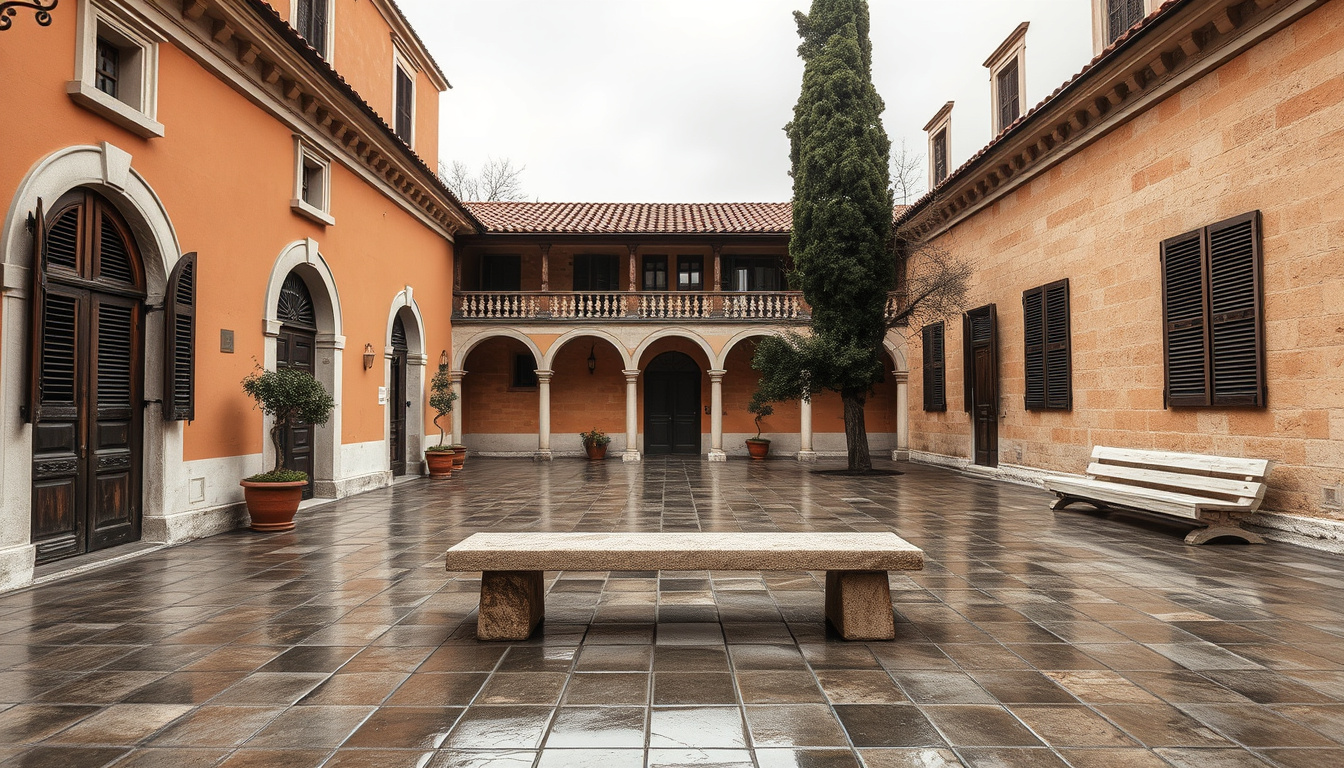
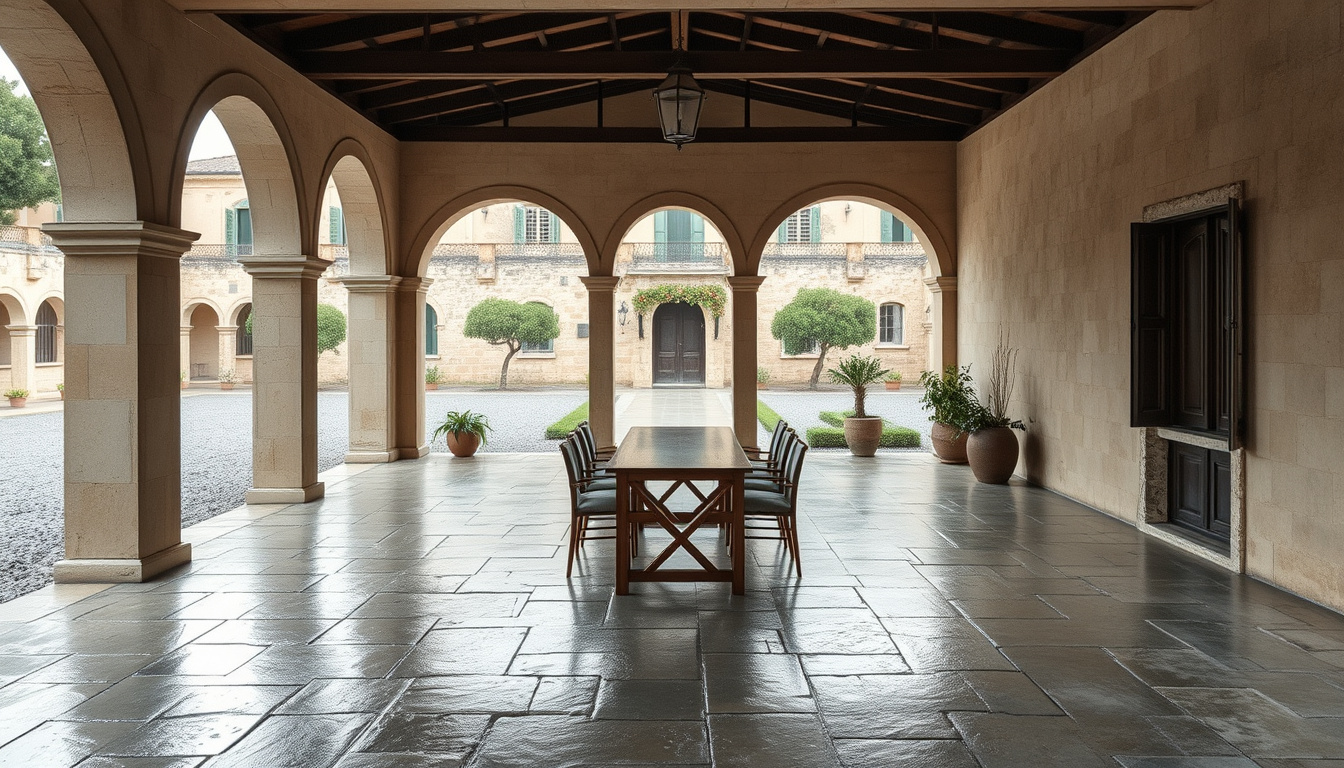
What I look for instead, before the day, is covered space: an arcade, a loggia, a courtyard with a deep overhang, a large room with tall windows. A portrait under an arcade, with the wet courtyard behind you and soft light arriving from the side, is often better than the terrace view you had planned. Nobody needs to stand in the rain to make a good photograph.
The one thing worth avoiding is a plan that depends on a particular view being dry. If the terrace above the sea is why you chose the venue, decide in advance what your second version looks like and make sure it is somewhere you actually like, rather than a corridor outside the kitchens.
An illustrative wet-weather sequence
This is an illustration, not a template. Timings and decisions depend entirely on your date, your venue and your suppliers.
Notice how little of the day is actually lost. A wet afternoon generally removes the roaming photo session between the ceremony and dinner, and the aperitivo on a terrace. Everything else survives if the indoor space works.
- Morning. Getting ready proceeds as planned. The coordinator watches the forecast and the sky, and the agreed decision point arrives.
- The call. The decision is made on time, by the person you named, and the guests are told through the channel agreed beforehand.
- Ceremony. It happens indoors or under cover, with seating rearranged and musicians repositioned.
- Aperitivo. Guests stay under cover, standing, with drinks and food close at hand and photographs made at the edges of the group rather than in the middle of the rain.
- Couple session. Twenty to thirty minutes wherever the light and the cover are best: an arcade, a large window, a covered terrace.
- Dinner and dancing. Largely unchanged. The evening is usually the least affected part of a Sicilian wedding day.
Guests, transfers and the end of the night
Guests remember the walk from the car far longer than they remember the sky. If a wet evening means a hundred metres of wet gravel between the drop-off point and the door, that is the part worth planning: a closer drop-off, a shuttle that comes back, a covered route, or a supply of umbrellas that actually stay open.
Two groups deserve particular thought. Older guests and anyone with limited mobility may not want to cross a wet courtyard at all, so ask whether a door opens directly onto the dining room. Small children will find every puddle, so keep spare clothes with the parents rather than in a suitcase upstairs.
Shoes matter more than most couples expect. Polished stone and marble are slippery when wet, and a wedding day involves a great deal of standing. If your venue has long outdoor paths, plan for the walk rather than only for the photograph.
If your day involves a crossing — an island venue, a boat transfer — then the sea, not the rain, is the variable that matters most. Ask who monitors conditions and what the venue's procedure is when a sailing is disrupted. That answer belongs in writing before you book, and it reads well alongside planning a Sicily wedding around older guests and small children.
Planning it from abroad, and what to get in writing
From another country you cannot watch the sky, which makes the written plan more important, not less. Send the questions below with your enquiry and keep the replies with your contract. If you are still deciding on the region, the destination guides explain how each part of Sicily behaves through the year.
Then compare the replies. A venue that answers quickly and specifically, with a procedure it has used before, is telling you something useful. The wider list of points to settle is in what to ask a Sicilian wedding venue before you book, and the season-by-season view is in the best time of year for a wedding in Sicily.
If you would like to talk through your date and the venue you are weighing up, tell me where and when you are marrying and what matters most about the day — check your date and I will reply personally.
- How many guests does the indoor room seat for a ceremony and for dinner, and does anything have to be removed to make that work?
- At what time do you need to decide to move the ceremony indoors?
- Who makes that decision — the venue, the planner or us?
- What is your own procedure on a wet day, and who tells the guests?
- Is a marquee, canopy or covered structure permitted, how far in advance must it be ordered, and does that change the cost?
- Are there photographs of the room set up for a wedding, and of the covered space you would use for the aperitivo?
Frequently asked
- Does it rain much in Sicily during the wedding season?
- Sicily's wetter weather generally falls in late autumn and winter, and rain during the main wedding months is less common but certainly possible, with real differences between the coast, the mountains and the islands. Rather than plan around an average, ask your venue what recent seasons have brought and write a rain plan anyway.
- Can we still have photographs outside if it rains?
- Yes, with cover. An arcade, loggia or deep overhang gives you soft light and a dry floor without flattening the setting. What I avoid is asking a group to stand in the rain for a view they will not enjoy. Twenty minutes under cover is usually enough, and better, than an hour on a wet terrace.
- When should we tell guests the plan has changed?
- Agree the channel before the wedding, whether that is a group message, the venue's coordinator or your planner, and decide who sends it. Guests cope well with a change of room and badly with uncertainty, so one clear message at the agreed moment works better than several contradictory ones.
- Should we book a marquee or covered structure just in case?
- Only if the venue allows it and you know the lead time and the cost of cancelling. Many Sicilian venues are not set up for temporary structures, and some have covered spaces of their own that make one unnecessary. Ask the venue first and get the answer in writing.
Sources & further reading
Photographed across the whole island
See how a Sicilian wedding day is documented on the Destination Wedding Sicily home page, explore the location guides, or view the full Italian portfolio at rosariospadaro.com.
Check your dateKeep reading